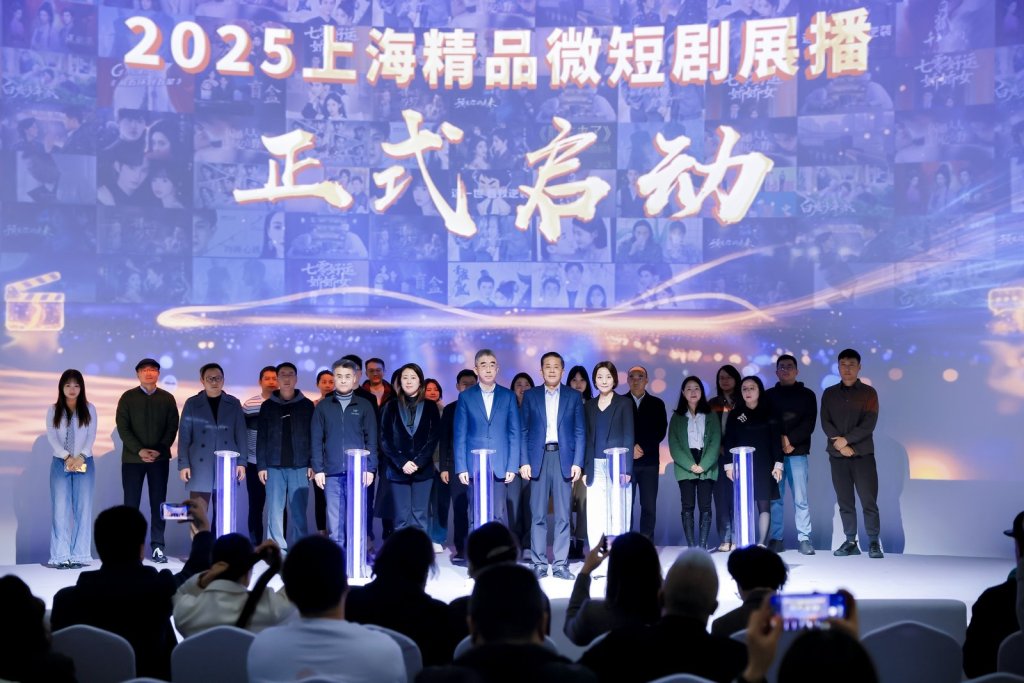
On December 11, 2025, an industry conference that seemed to focus on micro-dramas quietly released a bigger signal in Yangpu, Shanghai: this content format, which was once labeled as "rustic," "outrageous," and "fast-moving consumer goods," is accelerating its transformation into a mainstream cultural product under the combined efforts of policy, capital, and technology.
On the same day, the "2025 Shanghai High-Quality Micro-Drama Industry Promotion Conference" was held at the Yangpu Innovation and Entrepreneurship Digital Planet. On the surface, it was a routine industry event—releasing reports, launching exhibitions, announcing support projects, and having industry leaders share their experiences. But a closer look reveals a systematic plan for Shanghai to build a "new highland" for micro-dramas: 90 works were simultaneously launched on eleven platforms, a maximum subsidy of 3 million yuan for a single project, the exclusive production company of Ma Boyong's IP short drama joined the platform, and AI empowered the entire production process... All these measures point to the same goal: to make micro-dramas no longer just a traffic game, but a "new popular art" that can be preserved, exported, and represent the city's cultural soft power.
Over the past year, the Chinese micro-drama market has exceeded 60 billion yuan, with nearly 700 million users. However, behind this prosperity, issues of homogenization and low quality have become increasingly prominent. It is against this backdrop that Shanghai has chosen to break through with a focus on "high-quality productions." The 90 works showcased this time are not simply a collection of online releases, but rather a joint effort by traditional mainstream media such as Dragon TV and The Paper, and internet platforms such as Red Fruit, Bilibili, and Xiaohongshu, achieving "interaction between large and small screens." This arrangement aims to break down the barriers that have long confined micro-dramas to short video platforms, integrating them into a broader cultural dissemination system.
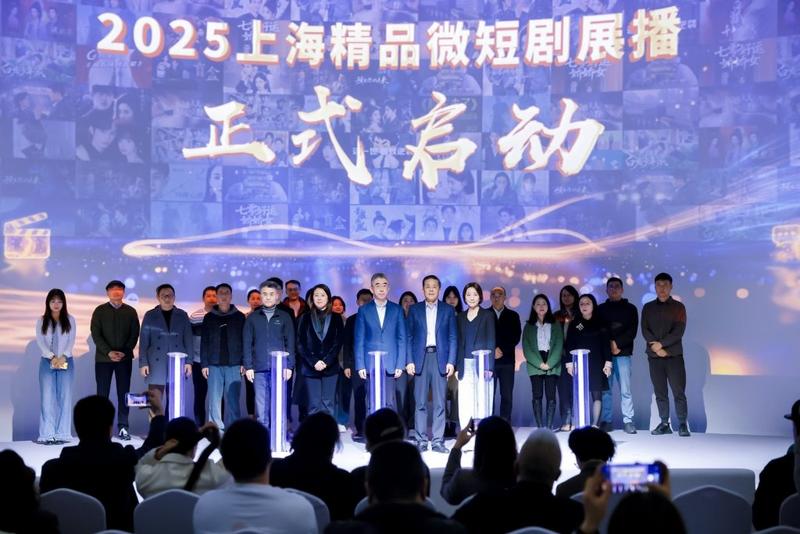
Launch ceremony of the broadcast
More noteworthy is the upgrade in content sources. At the conference, Shanghai Baiding Zaoxiang Film & Television Co., Ltd., the exclusive producer of Ma Boyong's IP short dramas, announced its establishment in Yangpu District. Earlier this year, the vertical-screen sci-fi comedy "Da Chong Yun," adapted from Ma Boyong's works, not only featured a novel theme but also fully utilized AI technology in art direction, special effects, and storyboarding, significantly reducing the production cycle. This marks the systematic entry of top-tier online literature IPs into the micro-drama field and signifies a shift in content creation from a "feel-good" logic to a "quality" logic.
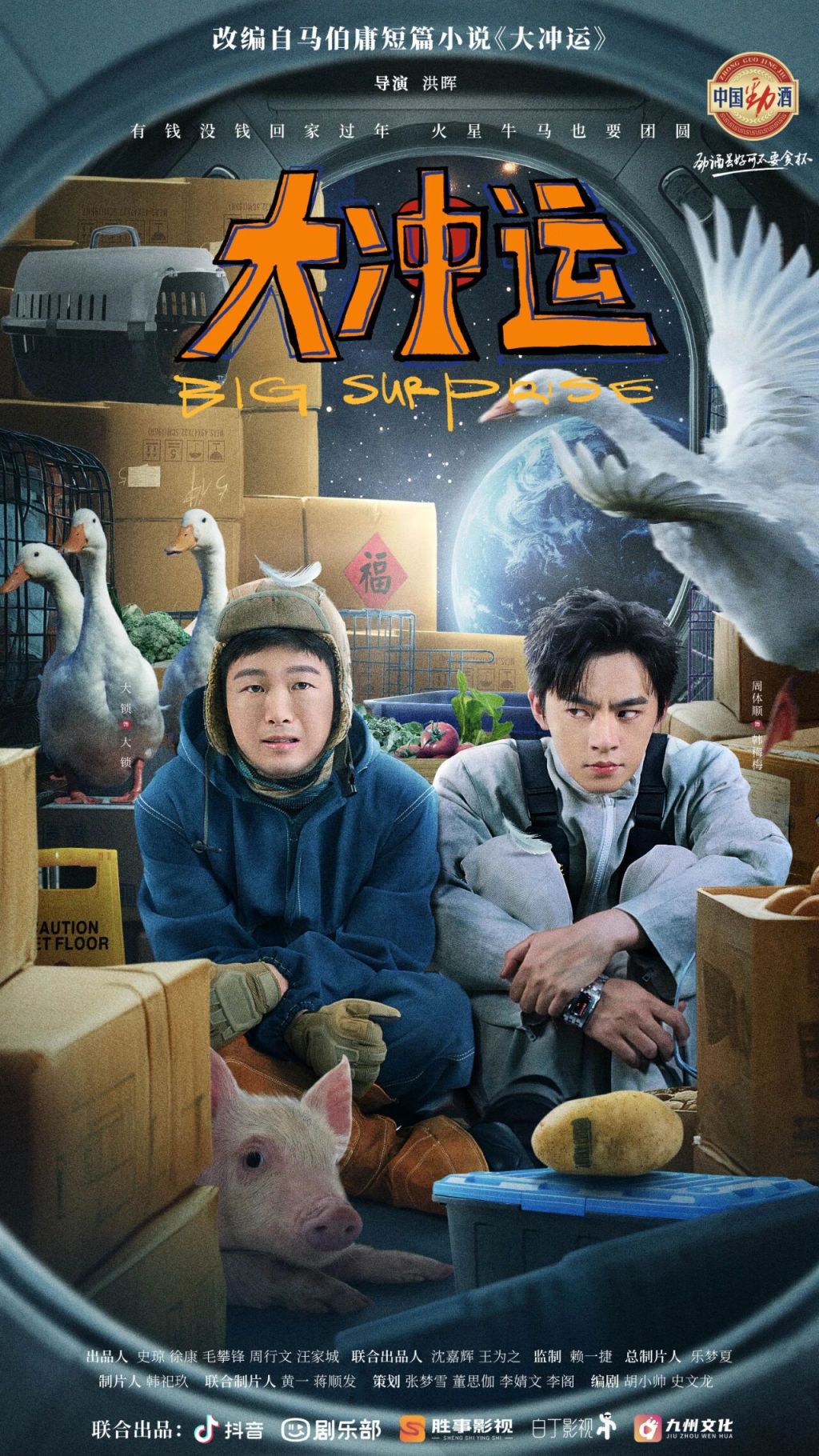
Poster for "The Great Luck"
Supporting this transformation is substantial policy investment. It has been revealed that Shanghai has invested nearly 40 million yuan in the past year and a half to support the micro-drama industry. The second batch of special funds released this time alone allocated 11.97 million yuan to support 22 projects, covering multiple dimensions such as high-quality content, technological empowerment, and international dissemination. The evaluation criteria clearly focus on "high-quality creation, industry promotion, technological empowerment, and international dissemination," demonstrating that Shanghai not only aims to expand the industry's scale but also to set industry benchmarks.
The "2025 Shanghai Micro-Drama Industry Development Report," jointly released by the Shanghai Internet Audio-Visual Industry Association and DataEye, further outlines the future path: focusing on quality, deepening technological empowerment, building a healthy ecosystem, and promoting international expansion. Among these, "AIGC full-chain application" and "cultural export" are repeatedly emphasized. In fact, Shanghai-produced micro-dramas such as *Reply 1937*, *The World of the Aunties*, and *Northeast Love Story: Flash Marriage Rose* have already demonstrated that when micro-dramas possess distinct cultural identity and narrative innovation, they are fully capable of achieving cross-sector and even cross-border dissemination.
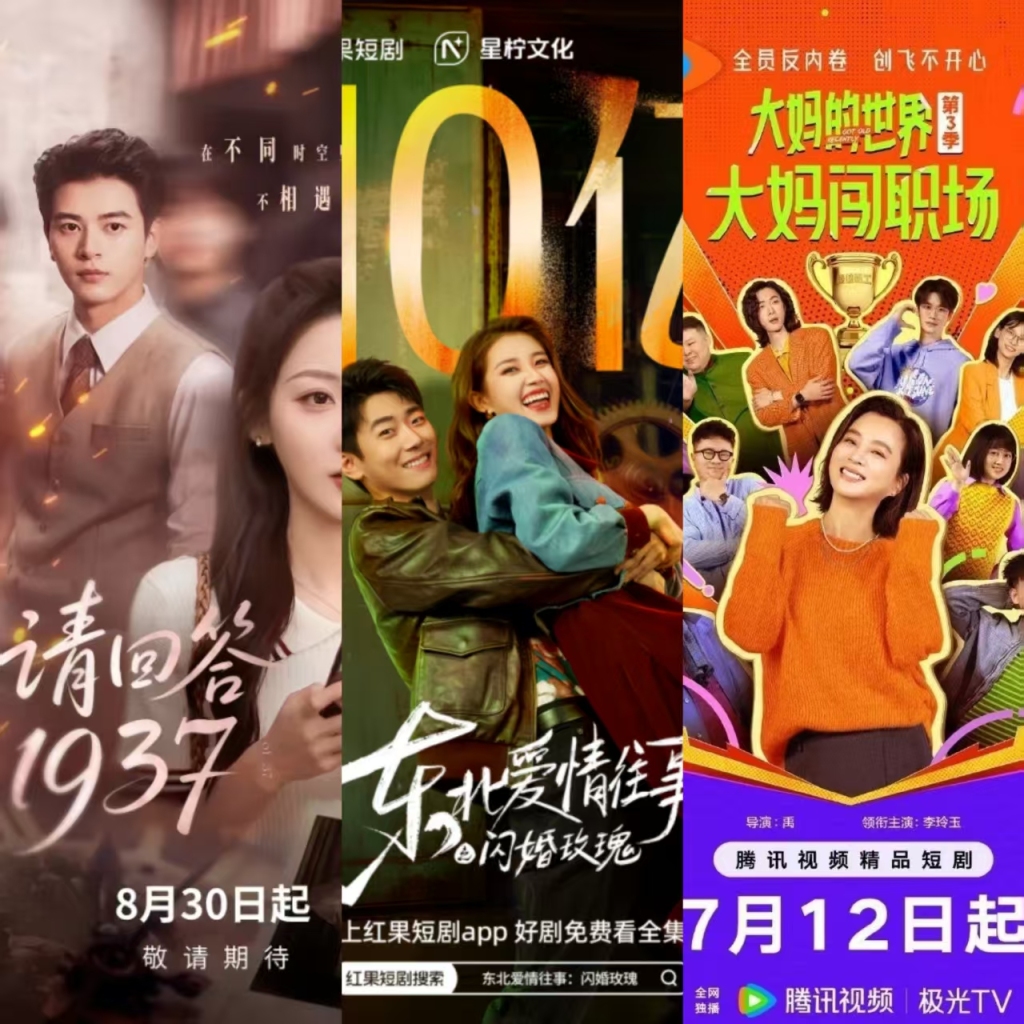
"Reply 1937," "The World of the Aunties," and "Northeast Love Story: Flash Marriage Rose" are successful examples of Shanghai-produced micro-dramas achieving high quality and breaking into new audiences.
Looking back from the end of 2025, micro-dramas have moved beyond their period of rapid, unregulated growth. Shanghai's choice clearly indicates that the next competitive arena lies not in traffic, but in the depth of content, the sophistication of technology, and the breadth of culture. This conference may not be the end, but it could very well be a crucial turning point for micro-dramas, moving them from a "phenomenon" to a "paradigm."