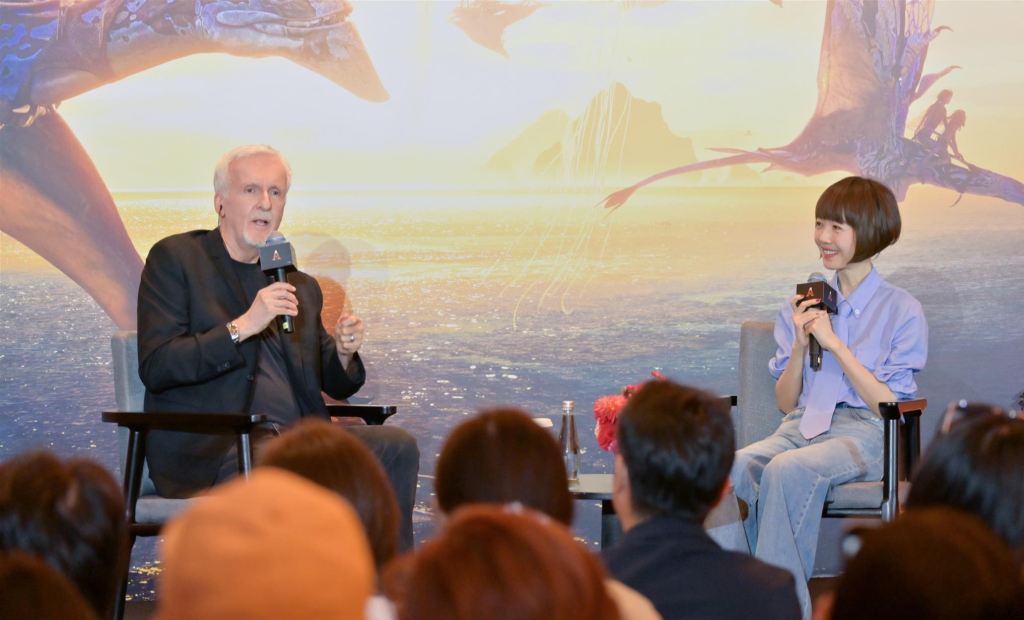
On December 9th, the final day of the 7th Hainan Island International Film Festival, James Cameron delivered a masterclass on the creative inspiration and cinematic philosophy behind the Avatar series. This director, who marked a watershed moment in film history before and after Avatar, engaged in in-depth dialogue with film enthusiasts on core topics such as the unique value of theatrical viewing, the boundaries between AI and creation, the inspiration behind the Avatar series, and the balance between technology and art. He sincerely shared his commitment to and exploration of cinematic art.
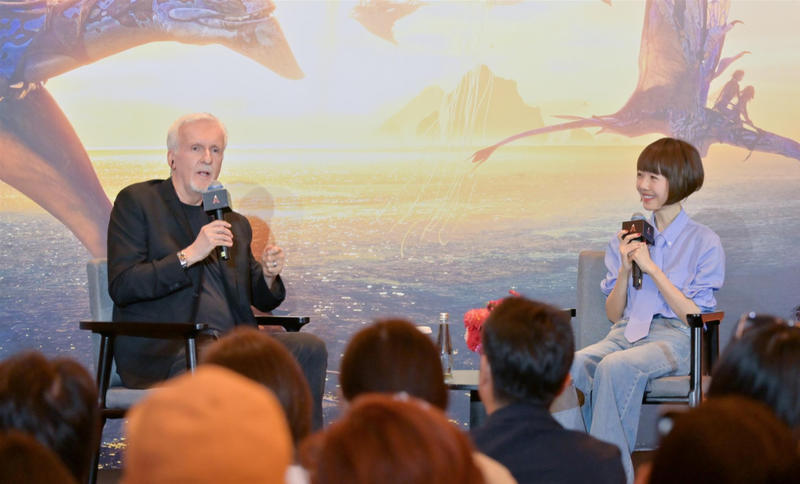
Chen Luyu hosted the Cameron Masterclass. (Image from @SanyaRelease)
Creative Inspiration: Inspiration from Family, Adventure, and Nature
The Avatar series has been around for 16 years now. When discussing why this most ambitious global film IP has continued to resonate with audiences worldwide for over 16 years, Cameron believes the core lies in its creative core rooted in shared human experiences. "Back then, it also achieved remarkable box office success and critical acclaim in China. We didn't use Chinese actors, nor did we address any Chinese issues. Avatar has never been about a specific country or language; it's about what we all share, including human emotions, and how we deal with our own growing pains, identity issues, and other more universal problems."
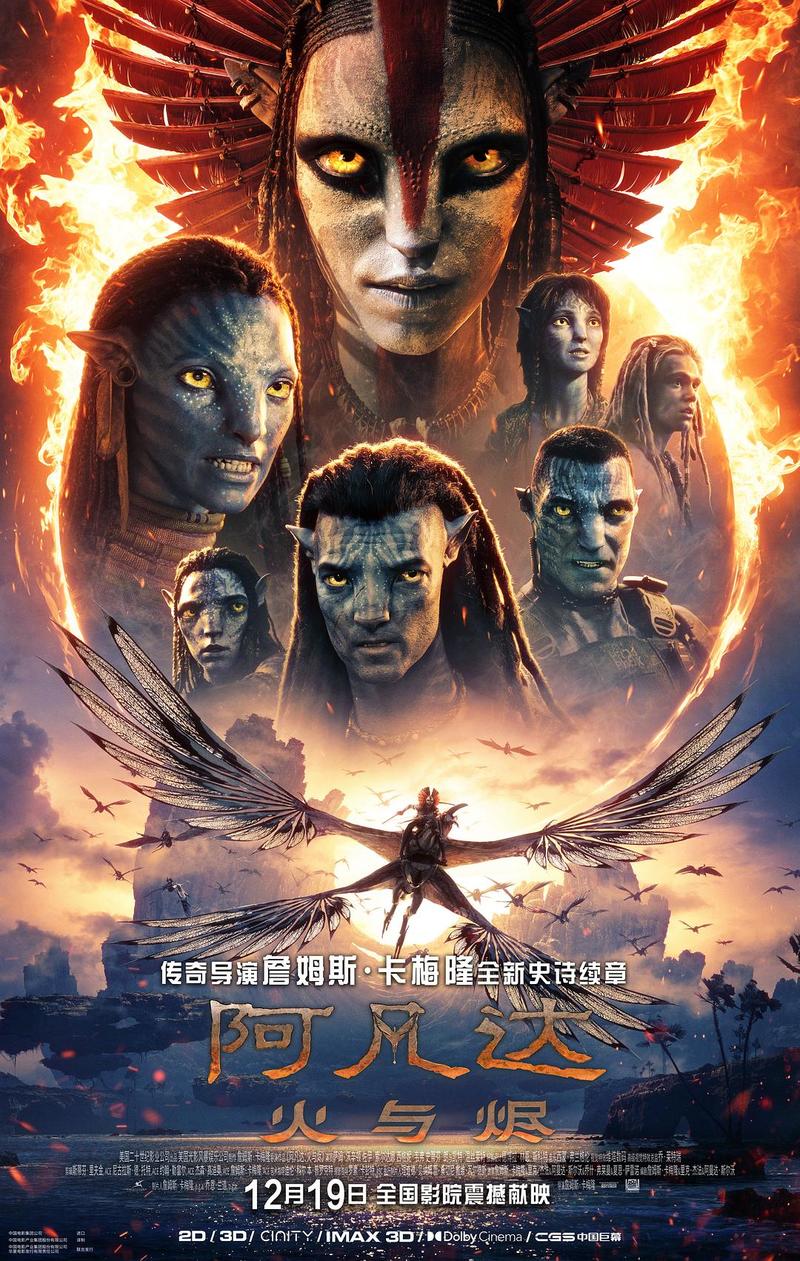
Avatar 3 poster
Although the film tells an alien story, every detail is inseparable from Cameron's personal experiences and life insights. In the masterclass, he discussed the close connection between the film and himself, explaining how his childhood anxieties and confusion, and his shift in perspective after becoming a father of five, all contributed to the film's profound exploration of growth, family, and responsibility. "I was full of anxiety during my teenage years, not knowing what I wanted to do in the future, and everyone feels that way. During the production process, many of our children entered adolescence, and I re-examined everything from a father's perspective. We'll see what an invincible hero becomes after having children, and audiences worldwide will resonate with that. Many viewers aren't parents yet, and some are already parents, and I'll share my own feelings; it's a great exchange," Cameron said.
The film's line, "A family will never be separated, a family will never give up," is a direct reflection of Cameron's life beliefs. "I'm a person who never gives up. When I was a director early in my career, I often told myself to keep exploring." He also uses this to encourage young filmmakers: "Don't give up. No one will give you a magic cure. You must work hard for your dreams and cherish your connection with your team." This appreciation for family and perseverance allows the Avatar series to transcend its science fiction shell and become a film about "humanity."
The experience of deep-sea exploration provided a constant source of inspiration for the fantasy world of Avatar. The reverence for nature imbued the fantastical creatures and ecosystems of Avatar with realistic details and textures, while also conveying profound reflections on the relationship between nature and humanity.
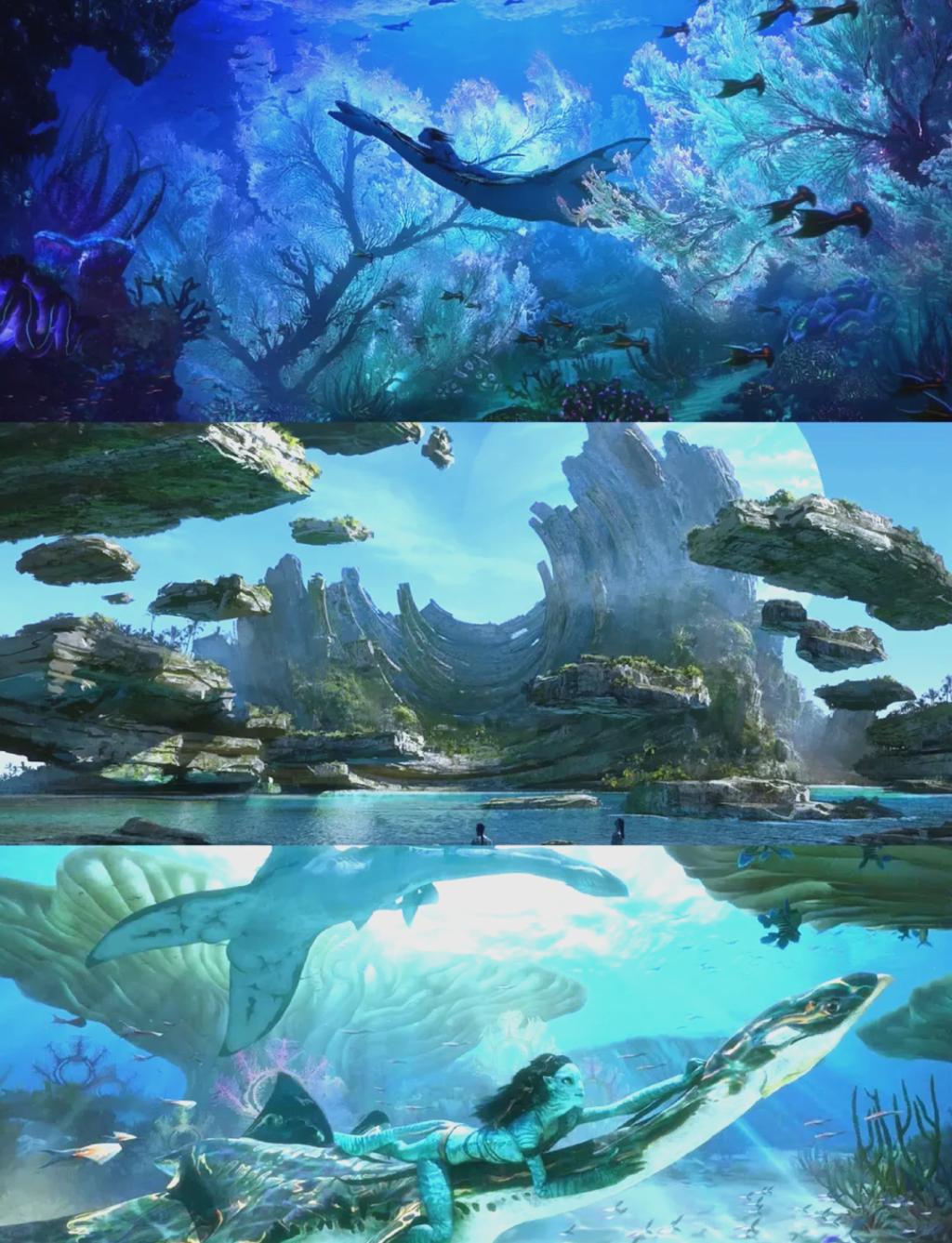
The ocean world in Avatar 2
Cameron, who has undertaken eight deep-sea expeditions, spoke of his 2012 deep-sea journey, which revealed a mysterious landscape drastically different from shallow waters—tiny creatures, vibrant coral reefs, and enormous jellyfish, two meters in diameter and as thin as a cicada's wing. The giant jellyfish-like creatures floating in *Avatar 3* were also inspired by Cameron's observations of the deep sea, which he then adapted slightly. "Every time I step into this sacred place, even just wading in a little, I always discover something," he says. While fans haile the director as "Cameron the God," captivated by his extraordinary imagination in creating otherworldly realms, he maintains, "Human imagination is far inferior to nature's. What we consider original designs were already presented by nature hundreds of millions of years ago."
AI can optimize processes, but it struggles to overcome creative barriers.
As a director who has pushed the boundaries of "scrolling" technology to its limits, Cameron was inevitably asked about AI, a topic of great interest to the film industry today, during his masterclass.
In an era where AI technology is sweeping the globe, Cameron's stance is clear and rational: "I have absolutely no interest in generative AI; it can never replace human creation." He bluntly states that the core limitation of AI is that it can only replicate existing works, but cannot create "things we've never seen before." "AI can make a movie similar to Avatar, but it couldn't do that before Avatar was released." Cameron, who spent a full year and a half on motion capture for Avatar 2 and 3, also doesn't believe AI can replace actors' performances. "Previously, actors needed special effects makeup to create characters; now we can use CG, but actors are still needed to perform."
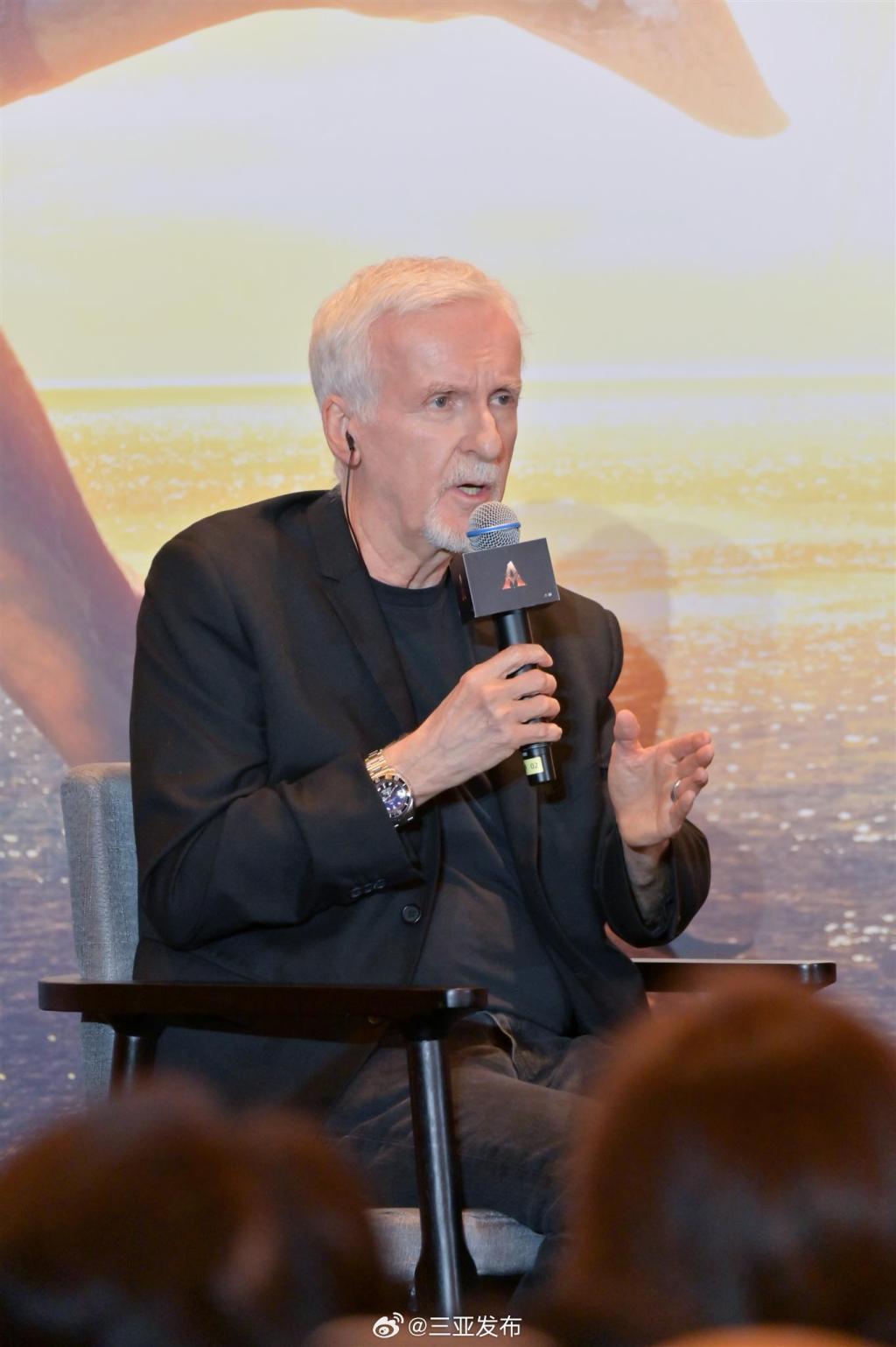
Cameron. Image from @SanyaRelease
“Technology should not sacrifice art. I will never let AI replace real actors. I enjoy working with them.” He called the performances in Avatar, powered by motion capture technology, “the purest form of performance,” because the actors incorporated their own life experiences into their performances. “The joy, pain, and love they have felt, all their experiences, have now been woven into an incredibly exquisite work.” As for generative AI, he said, “How can you truly move people if you try to use a model trained on all the results of past research?”
"When you watch Avatar 2, do you really believe that Neytiri or Jake are real?" Cameron asked the audience. "If the answer is yes, then our technology has succeeded. Because technology itself is not the goal; it is merely a tool to serve emotions and the story."
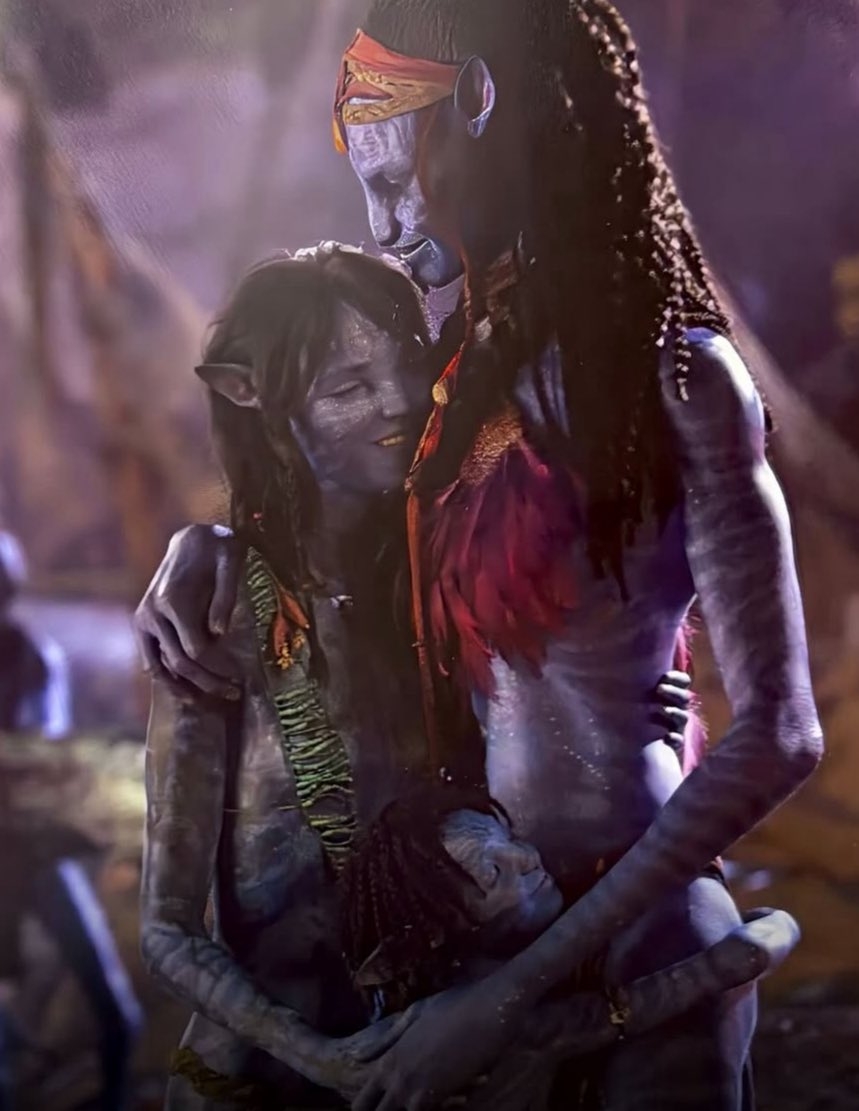
Avatar 3 still
Sixteen years ago, Avatar burst onto the scene, redefining the meaning of 3D in film. In this era, if there's any story that must be seen in theaters, the Avatar series is perhaps the definitive answer.
In fact, the high cost of the Avatar series has always been a source of pressure for Cameron. When discussing his future creative endeavors, he stated, "I want to continue making films that should at least first be shown in theaters." He admitted that the rise of streaming media and short videos has led to fewer people going to the cinema, "but watching movies at home makes it easy to remotely pause, fast forward, rewind, or even chat with friends in the middle; this kind of viewing is very fragmented." He added, "In the current era dominated by short videos, our attention is constantly being fragmented, but the cinema preserves the possibility of deep immersion for us." And away from his phone, in a dark theater, Cameron believes it can sharpen one's senses, "Your brain works more, it's more active, and you see things you couldn't see before."
Cameron described the film as a "life simulator": "It lets us experience love, loss, courage, sacrifice... these common human experiences in advance."