Those familiar with BBC documentaries know that it has a "wild" series, such as Wild Japan, Wild France, Wild Brazil, and Wild Africa. The English title of "Beautiful China," a co-production between BBC Studios and CCTV, is Wild China.
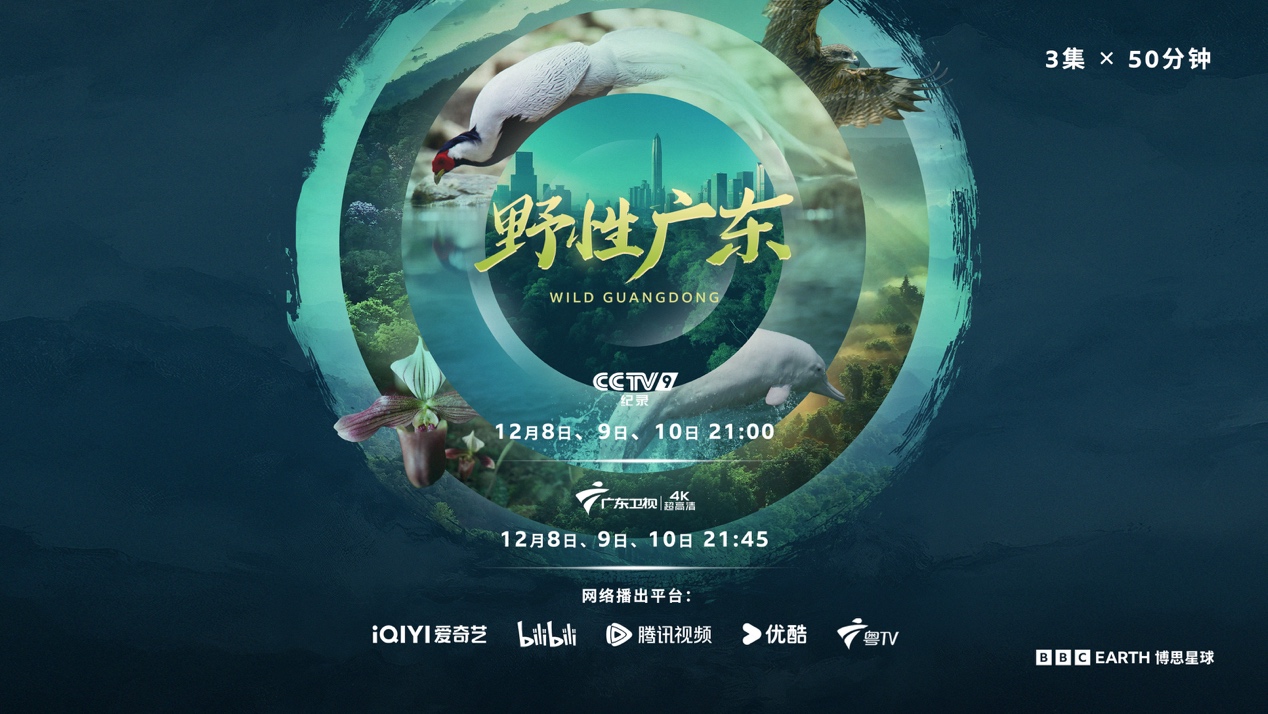
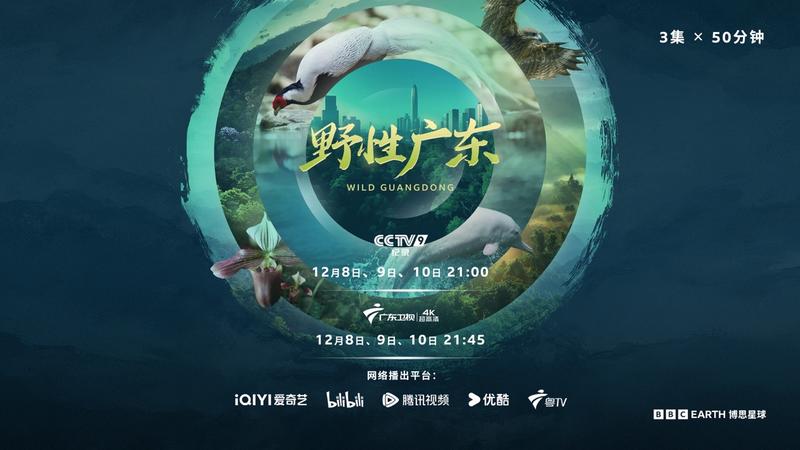
On December 5th, the launch ceremony for the 4K ultra-high-definition nature documentary "Wild Guangdong," co-produced by Guangdong Radio and Television Station and BBC Studios, and co-organized by the Guangdong Science Center, was held at the Guangdong Science Center. The three-episode series, each 50 minutes long, presents the vibrant and diverse landscape of Guangdong to a global audience through images of its mountains, oceans, and cities. The documentary will begin airing on BBC Earth Asia on December 7th, and will also air on CCTV-9 (Documentary Channel of China Central Television) and Guangdong TV from December 8th to 10th at 9:00 PM. It will also be available on Youku, iQiyi, Tencent Video, Bilibili, and YueTV platforms.
“When I was doing preliminary research in London, my imagination of Guangdong was limited to ‘the world’s factory’,” Simon Winchcomb, a producer at BBC Studios, admitted in an interview. “But when I actually stood in Shenzhen Bay and saw flocks of migratory birds on the mangrove mudflats with skyscrapers behind them, the shock was indescribable.”
Presenting the ecological wonders of Lingnan from an international perspective
"Wild Guangdong" is a project meticulously crafted over three years by Guangdong Radio and Television in collaboration with BBC Studios. This marks the first time BBC Studios has partnered with a provincial-level media organization in China to focus its lens on the land of southern Guangdong.
Documentary Image
Although Guangdong Province is located in the Tropic of Cancer's arid zone, its unique microclimate and complex topography have nurtured over 1,000 animal species and more than 6,000 plant species, forming an ecosystem where mountains, water, cities, and the sea blend harmoniously. "Wild Guangdong" not only focuses on primeval forests and deep-sea wonders but also directs its lens at the vibrant life on the city's edge—migratory birds over Guangzhou, fiddler crabs in the mangroves, and the purple-striped slipper orchids in the South China National Botanical Garden, collectively creating an ecological mosaic of "Wild Guangdong."
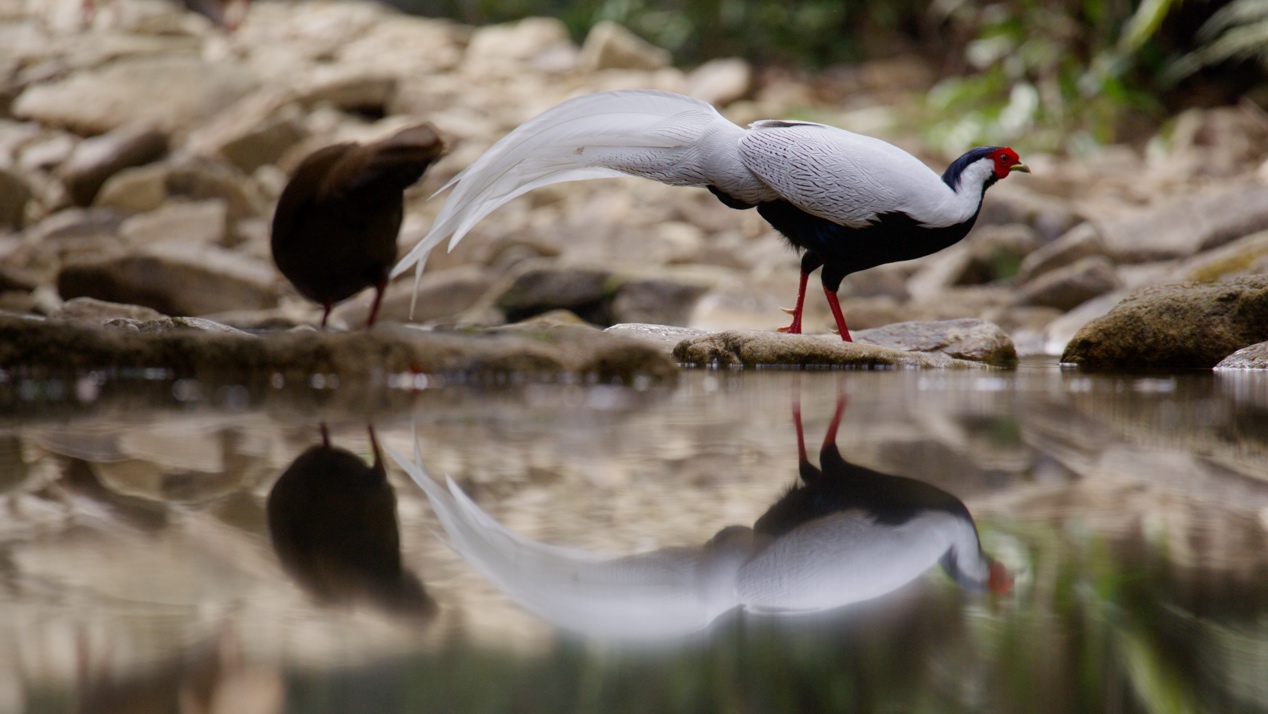
Documentary Image
"Wild Guangdong" weaves together captivating stories from Guangdong's rich ecosystem with an intricate "pearl necklace" structure. The production team traversed the entire seasons, venturing deep into the primeval forests of the Nanling Mountains in northern Guangdong, the coral reefs of the South China Sea, the coastal mangroves, and modern urban green spaces, capturing precious footage such as black kites soaring over Danxia landforms, Indo-Pacific humpback dolphins chasing the waves, corals laying eggs in unison, and the discovery of a new species of eyelid gecko. The film presents not merely a list of species, but a story of interdependence among life forms and the harmonious coexistence of humans and nature.
“This film tells us that economic development and ecological protection are not a zero-sum game,” said Tan Shizhen, the film’s producer. “The example of Guangdong proves that you can have dense urban clusters and a huge manufacturing industry while still leaving habitats for white dolphins, black-faced spoonbills and macaques. The key is to leave space for nature in advance in the planning process.”
Simon shared a touching detail from the filming process: "In a green space in Shenzhen, I saw a sign that not only reminded people to protect macaques, but also explained why these macaques appear on the edge of the city, what their behavior patterns are, and how humans should interact with them. It's not just about 'protection,' but about building a relationship of mutual understanding."
To better present the film's effects and to popularize Guangdong's ecological knowledge among the audience, the premiere ceremony was specially held in the giant screen theater of the Guangdong Science Center, which uses the latest generation of screen technology, the Nano Screen. Through the 4K digital cinema laser projection system and Dolby Atmos sound system, the audience was able to immerse themselves in the film's audiovisual experience. The ceremony also allowed more viewers to learn about the stories behind the documentary's production through face-to-face exchanges between the producer and the public.
Observe the wildness around you and interpret harmonious coexistence.
During the creation of "Wild Guangdong", we received support from the South China Botanical Garden of the Chinese Academy of Sciences, the Guangdong Provincial Department of Ecology and Environment, the Guangdong Provincial Department of Agriculture and Rural Affairs, the Guangdong Provincial Department of Natural Resources, the Guangdong Provincial Forestry Bureau, as well as experts, scholars and environmental volunteers from various protected areas, ensuring the scientific accuracy and authority of the film.
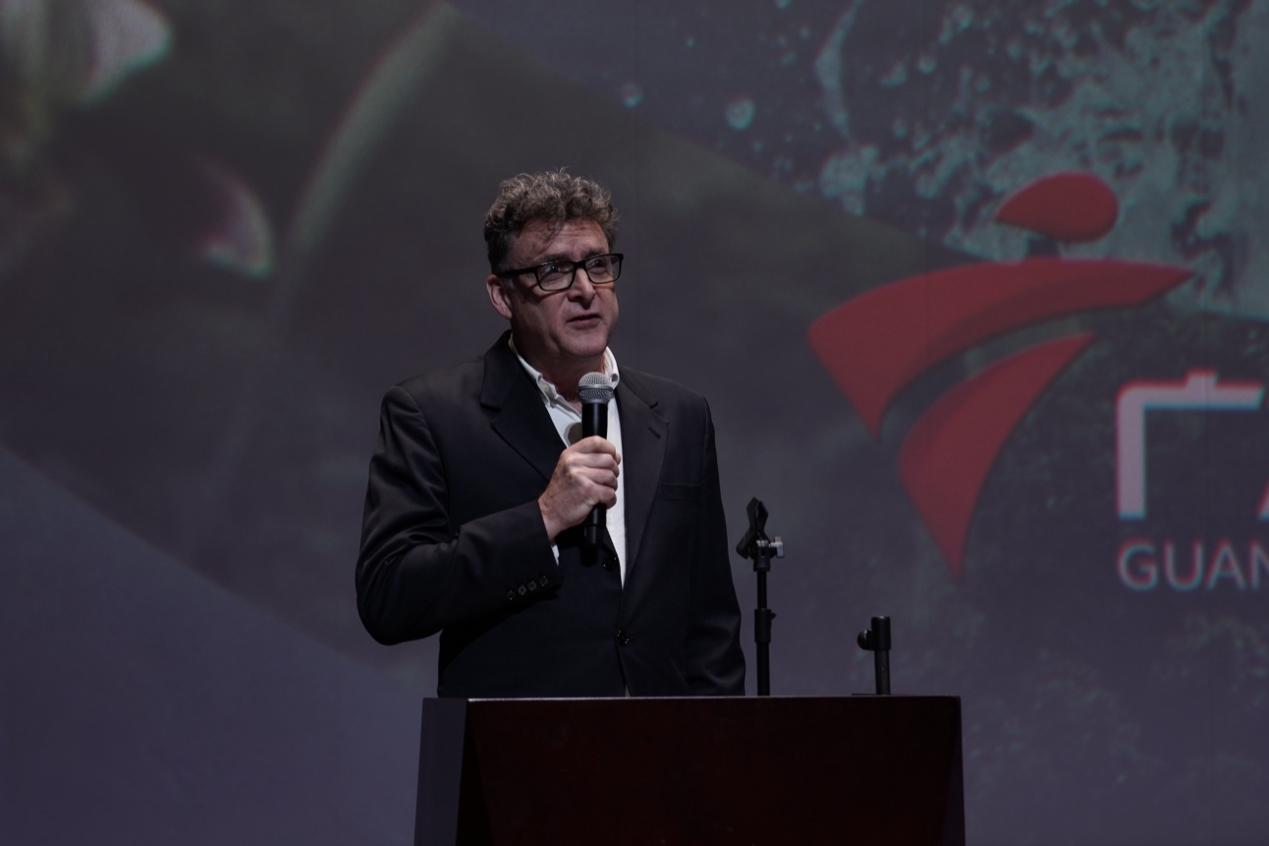
Simon Winchcom, producer at BBC Studios
The filming process was fraught with unknowns and challenges. Simon recalled that the most difficult subjects to film were the Indo-Pacific humpback dolphins. "They live on the seabed, and you never know when they will leap out of the water. The crew waited for many days in the Jiangmen Nature Reserve, often spending entire days at sea under the scorching sun without any results. Moreover, it was impossible to go out to sea if the waves exceeded Force 4." Finally, with the help of a local scientist, the team was fortunate enough to capture the magnificent moment when a group of dolphins leaped out of the water collectively at dawn. "At that moment, everyone was so excited that they couldn't speak."
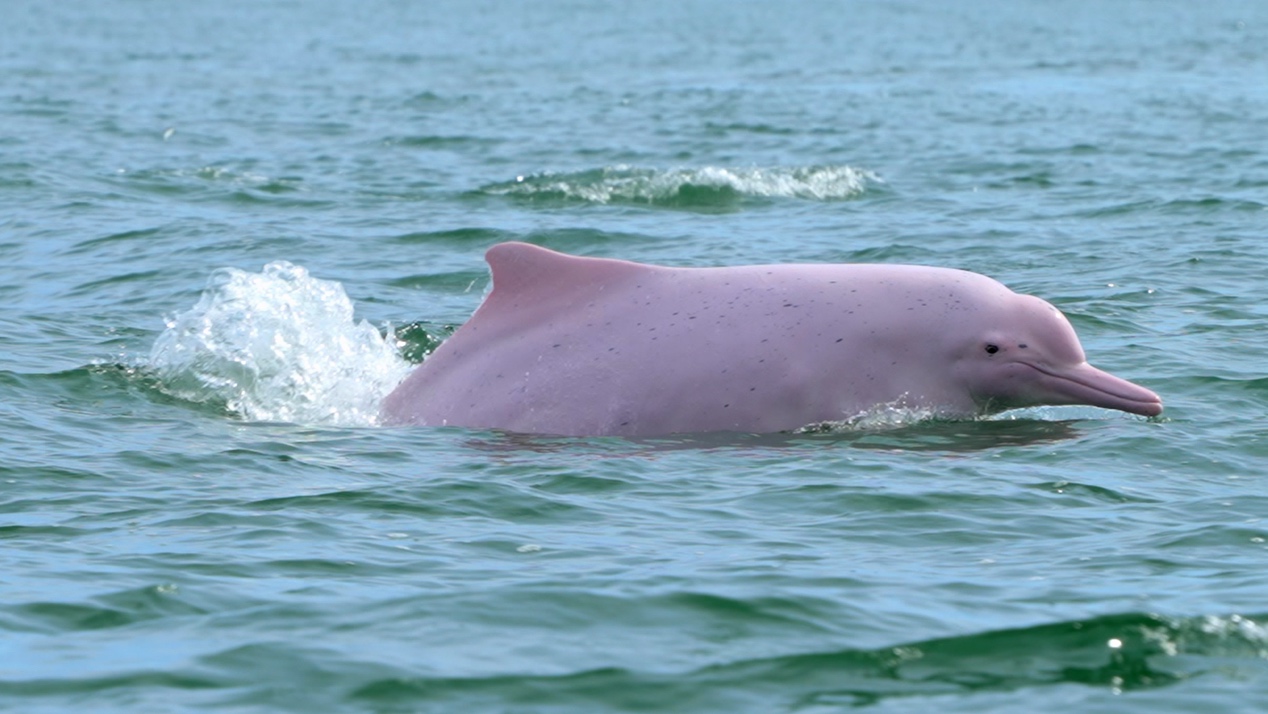
Documentary Image
Another "thrilling moment" occurred in Shenzhen Bay. To film the globally endangered black-faced spoonbill, the team, following expert advice, went to a coastline to wait. "We waited all day, without a trace," Simon said. "And two days later we had to move to the next filming location hundreds of kilometers away." Just the morning of the second day, when they almost gave up, four black-faced spoonbills gracefully landed on the mudflats. "If we hadn't waited, there would have been a seven-minute blank in the film. That's how documentary filmmaking is; 90% patient waiting leads to 10% of a miracle moment."
Tan Shizhen admitted that he had some regrets, especially regarding the marine portion. "We tried our best to suggest filming more underwater scenes, but the cost of underwater filming increased exponentially—the cost of filming three or four land scenes might only be enough to film one underwater scene. Coupled with safety considerations, many ideas could not be realized." This gave him a new idea: "If I have the opportunity in the future, I would like to make a documentary purely about the ocean of Guangdong."
From the "Animal World" to the "Community of Life"
The most significant breakthrough of "Wild Guangdong" lies in its shift in narrative focus. Unlike traditional nature documentaries, this film devotes a large portion of its content to the "guardians"—those who protect this wild land behind the scenes.
“From the very beginning, our plan was not to make a purely nature program,” Simon emphasized. “In Guangdong, human stories and animal stories are equally important.” In the film, viewers will see Professor Zeng from the South China National Botanical Garden working 18 hours a day to protect endangered orchid species; volunteers for the conservation of white dolphins in Zhuhai recording the dorsal fin characteristics of each individual for decades; and birdwatching enthusiasts in Shenzhen using equipment more professional than that of the BBC crew to film migratory birds.
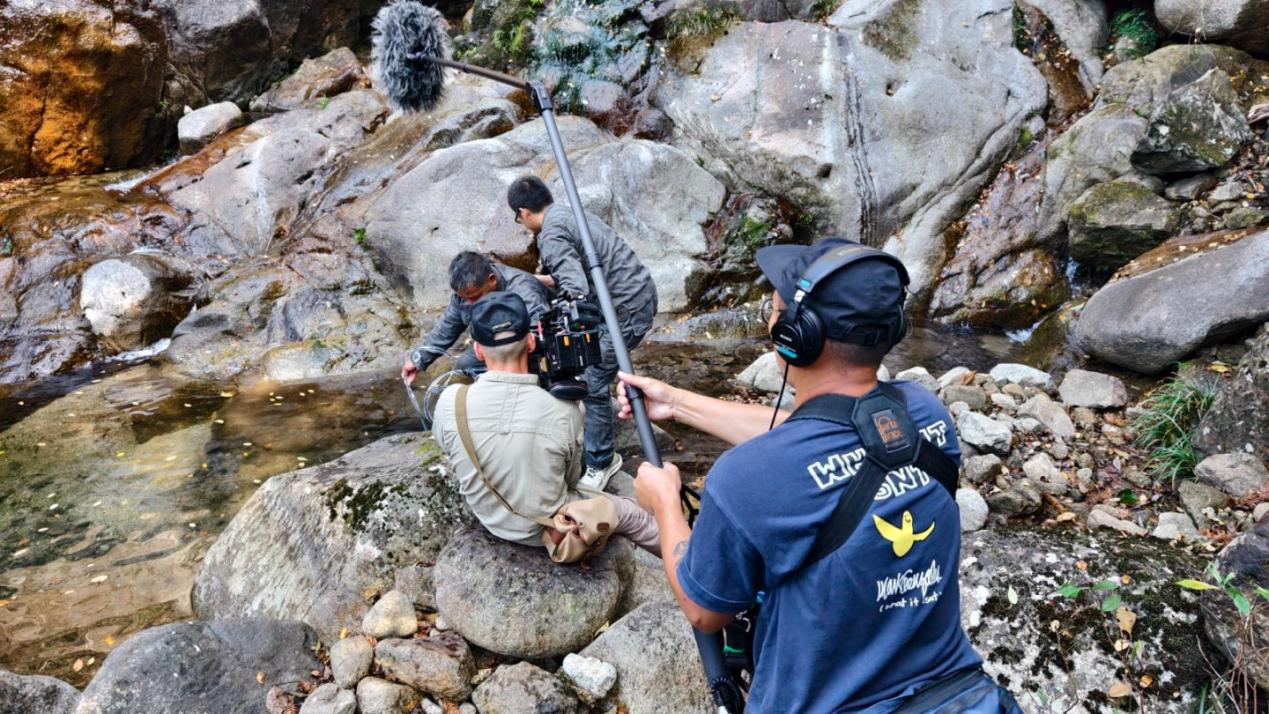
Behind-the-scenes footage
“We wanted to present the stories of these protectors, rather than simply conveying information through a ‘God’s-eye view’ narration,” Simon explained. “When viewers see real people having such a passion for nature, the impact is irreplaceable.”
This narrative choice stems from the creative team's profound understanding of Guangdong's ecological characteristics. Tan Shizhen stated frankly in an interview: "Guangdong's natural scenery may not be as magnificent as Tibet, Xinjiang, or Yunnan, nor does it have 'star species' like giant pandas or golden monkeys. But Guangdong's uniqueness lies in the fact that it is one of the most economically developed and densely populated regions in China, yet it has achieved an amazing balance between development and conservation."
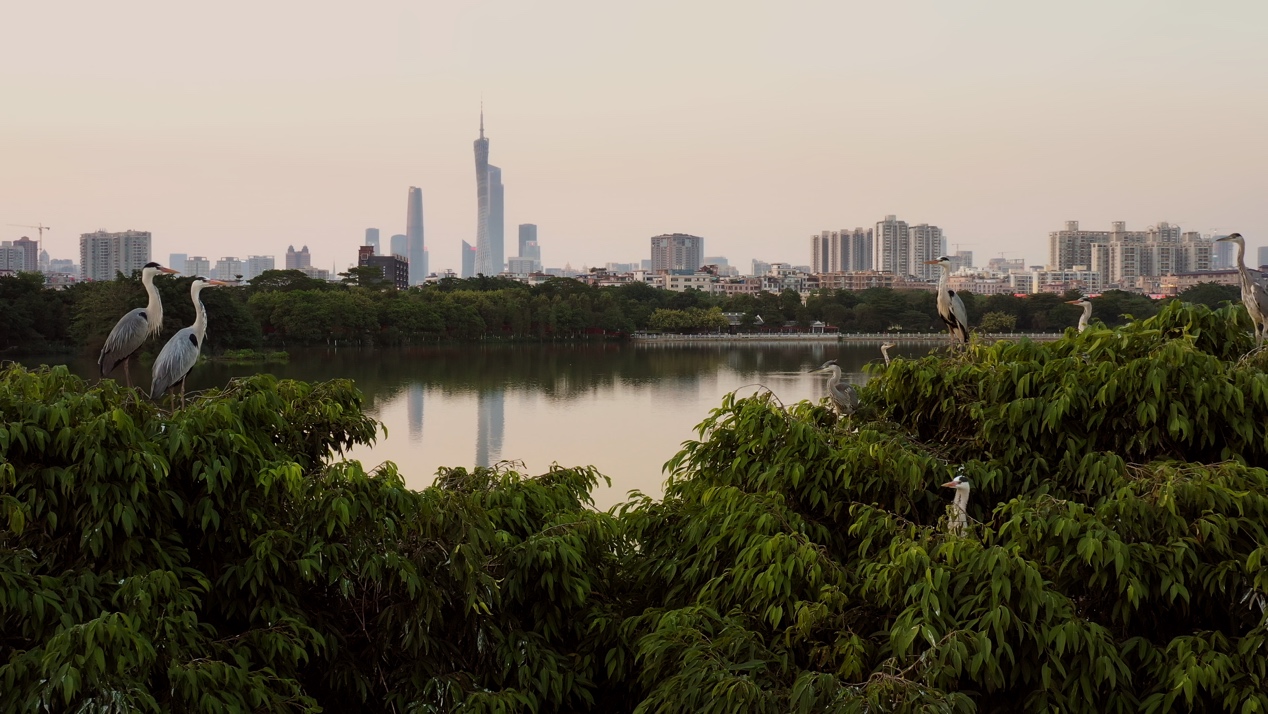
The third installment of the series, *Urban-Rural Symbiosis*, embodies this concept. The camera weaves through green parks nestled among Shenzhen's skyscrapers, capturing a family of macaques living peacefully in the urban jungle; in Guangzhou's Haizhu Wetland, the trees where egrets nest are separated from the skyline of Zhujiang New Town by only a narrow strip of water. Simon was deeply impressed by Guangdong's urban planning: "As an emerging city, Shenzhen consciously reserved space for nature during its rapid development, planning a large number of green spaces and ecological corridors. This reminds me of 19th-century London, which preserved Hyde Park amidst the industrial frenzy. It's remarkable foresight that decision-makers were willing to press the pause button on urban expansion, saying, 'This place should be left to nature.'"
Broadcast information for "Wild Guangdong":
International: BBC Earth (Asia Pacific Channel), December 7th, 14th, and 21st, 21:00.
Domestic: December 8-10, 21:00, CCTV-9 (Documentary Channel) of China Central Television.
December 8-10, 21:45, Guangdong TV
Online streaming: Youku, iQiyi, Tencent Video, Bilibili, Guangdong TV