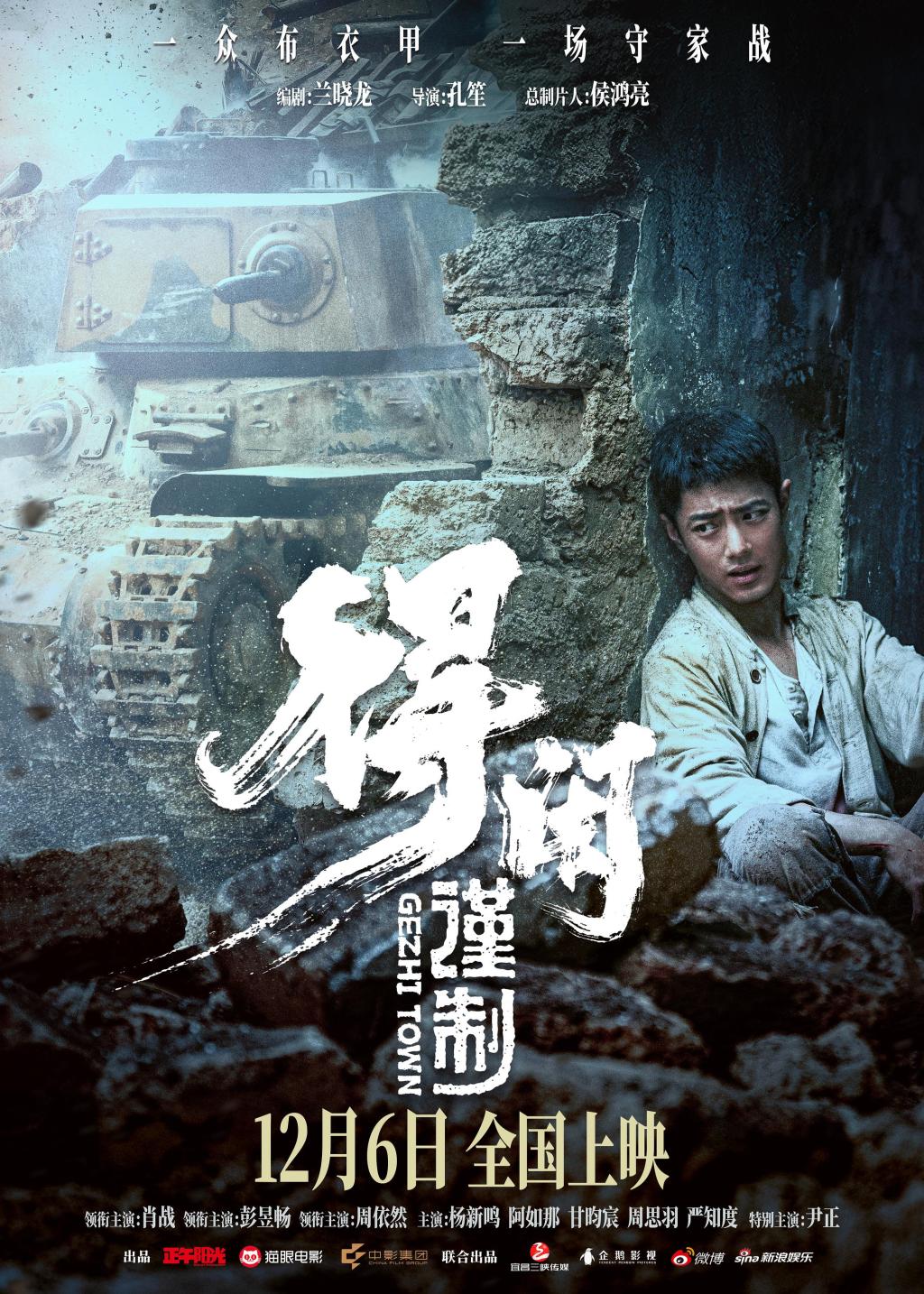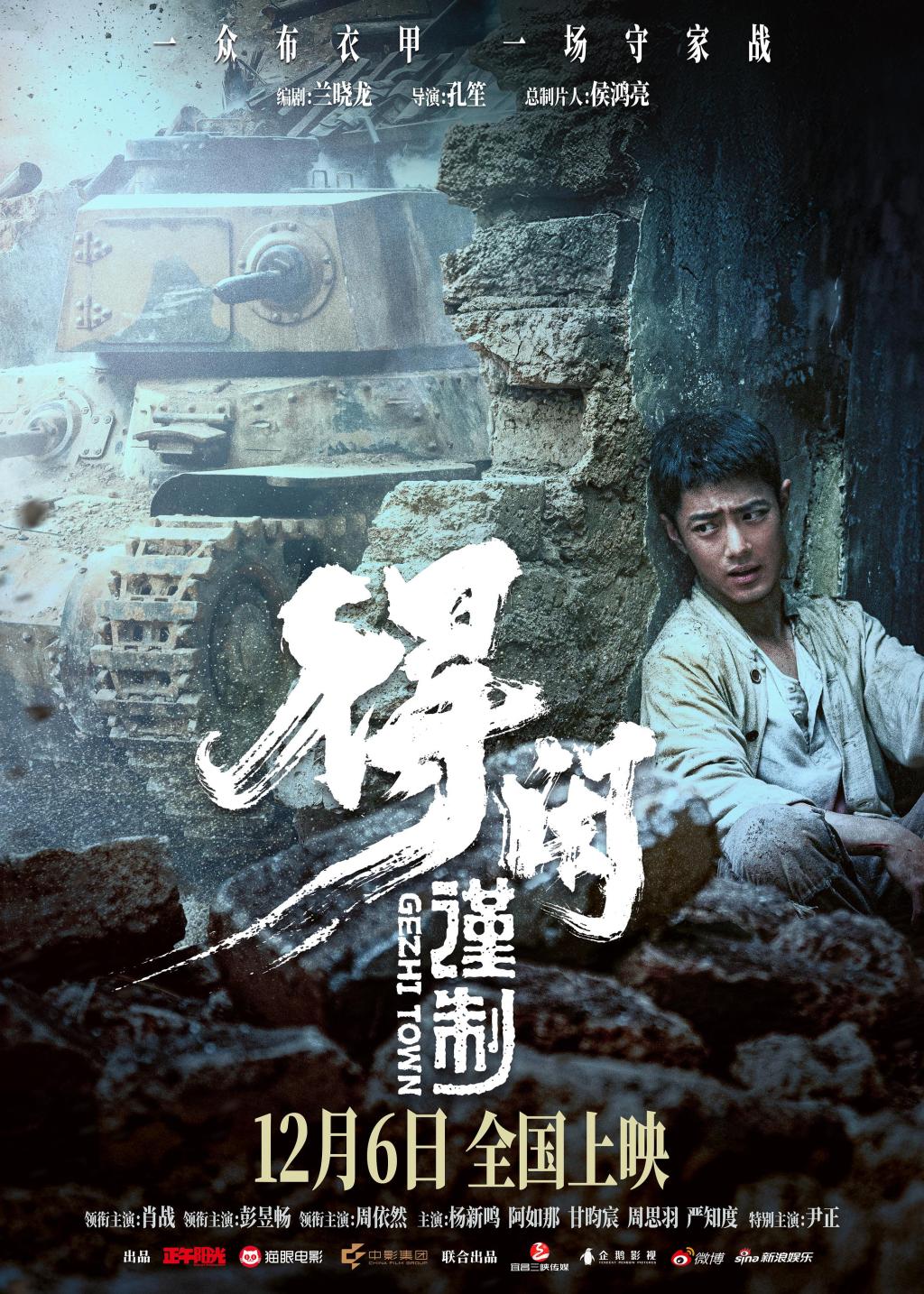
The name "Daylight Entertainment" has always been a golden brand in the television drama industry. From the political intrigue of *Nirvana in Fire* to the passionate love story of *Mountains and Seas*, Daylight Entertainment excels at weaving delicate emotions and plot threads within a grand historical context within lengthy narratives. *Leisurely Life*, as its first feature film, not only signifies that this industrialized domestic drama production company has officially entered the film production system, consciously aligning itself with the narrative rhythm of cinema, but also marks a stylistic experiment worthy of industry attention unfolding on the big screen. With its distinctive Daylight Entertainment production team and Lan Xiaolong at the helm, the film showcases a blend of dark humor and absurd realism.
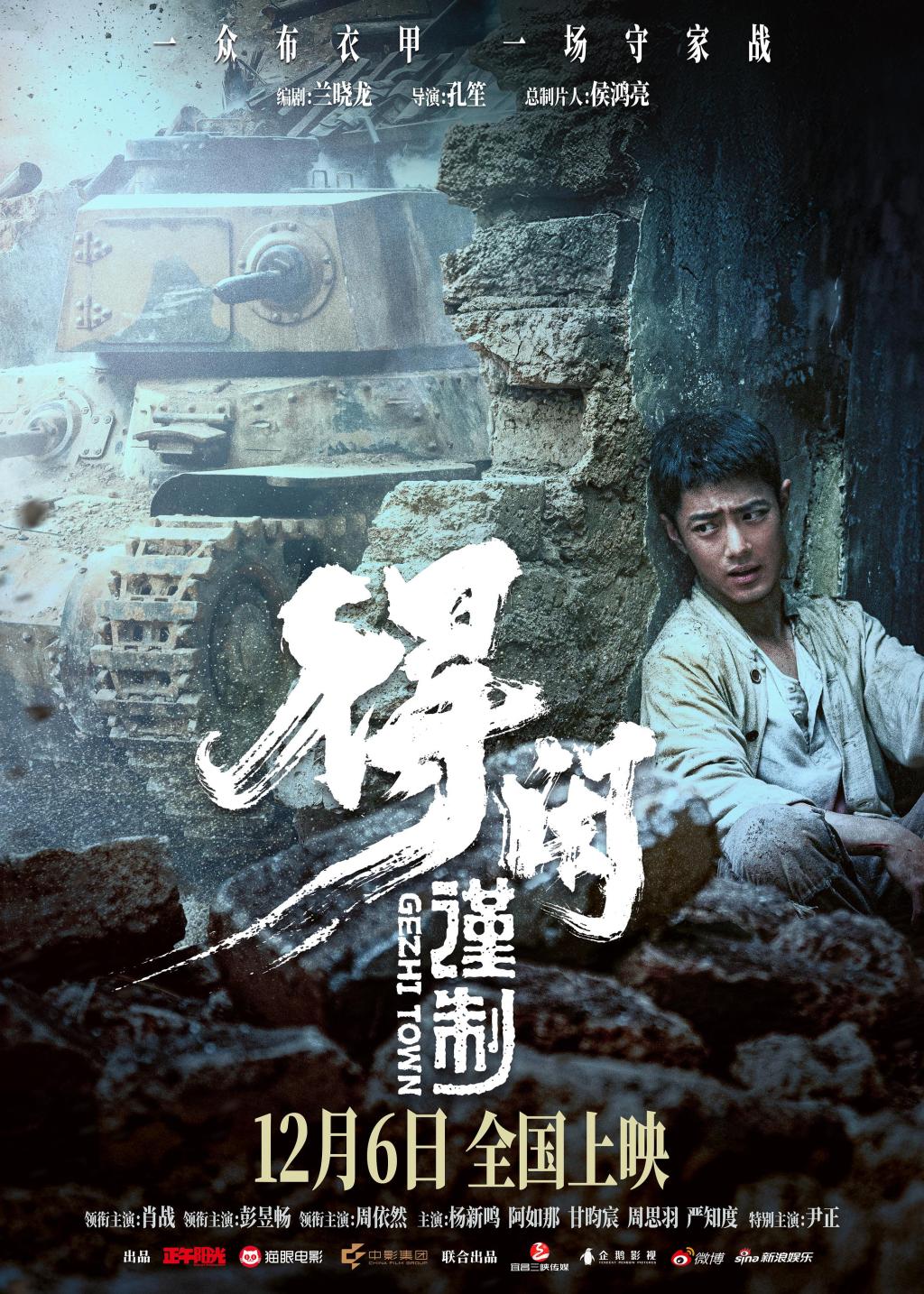
"Be Cautious When You're Free" is directed by Kong Sheng, written by Lan Xiaolong, and produced by Hou Hongliang.
The truth and cruelty in the outrageous tune
Viewed in terms of the work itself, *Leisurely and Cautious* is a story about ordinary people "rising from weakness to strength." It doesn't rely on direct battlefields or grand scenes, but focuses on a village and a single family. It is through these ordinary people that the film constructs the underlying logic of a spiritual allegory. They face not only external enemies, but also the endless suffering of displaced people, the helplessness of a broken nation and a destroyed home, and the inescapable tides of history. This imbues the film's narrative of the War of Resistance with a gentle yet profound realism; it is not a history of heroes, but a history of ordinary people; not a history of victory, but a history of survival.
When the audience sees the disorganized villagers being forced into a corner and ultimately forced to pick up kitchen knives, wooden sticks, and pitchforks to fight the enemy, the spiritual reversal that "even cowards can show the lion's spirit in times of crisis" forms the true narrative core of the film. In addition, the comedic tone of "Leisurely Life" further highlights the absurdity, helplessness, and sense of fate.
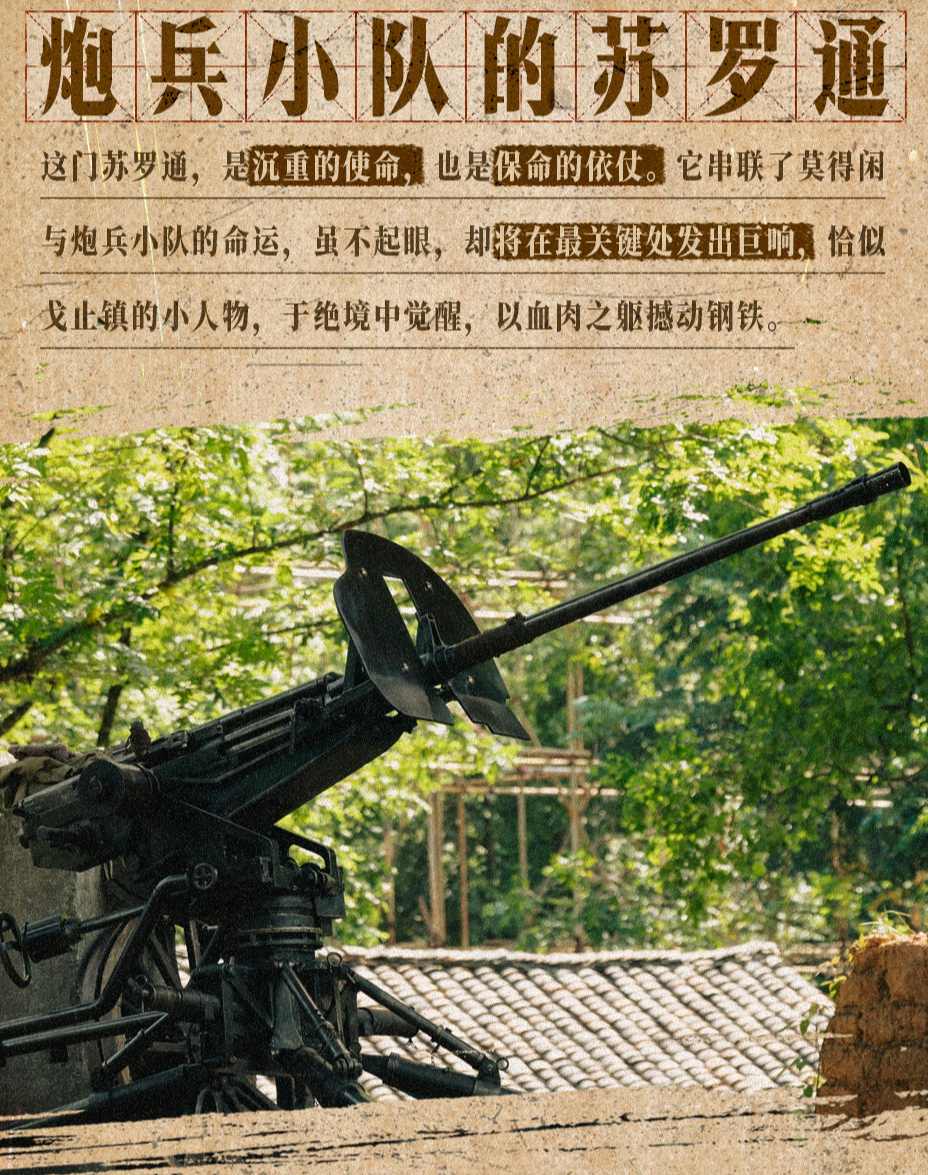
Lan Xiaolong didn't continue the tough-guy style of "Soldiers Sortie," but instead used an almost "unserious" farce to deconstruct the seriousness of war. This dark humor wasn't meant to please the audience, but rather a "passive defense" against the harsh reality. This absurdity is primarily concentrated in the makeshift unit led by Xiao Yan (Peng Yuchang). Viewers don't even need to see the enemy appear; the unit itself is enough to evoke both laughter and pity: their only heavy weapon is a Solothurn machine gun that needs constant repairs, and they have to keep paying Mo Dexian (Xiao Zhan) IOUs for its repairs. Xiao Yan and Mo Dexian, these two adversaries, one needing to repair the cannon, the other needing to collect debts, constantly give each other nicknames and sabotage each other.
Film Details Revealed
The film's plot is filled with "leisurely" humor: despite it being a night of life and death, the sparks between the characters feel like everyday trifles. This contrast reflects Lan Xiaolong's profound understanding of war narratives: the more extreme the environment, the more human nature is revealed, and this nature is often not heroism, but simply the act of living. This humor is also exemplified in the old man. When this old man, from a bygone era, wields a trembling yet resolute kitchen knife, charging towards the fully armed Japanese soldiers, the dramatic tension reaches its peak. A kitchen knife against guns, flesh against steel—this is inherently absurd. But Lan Xiaolong manages to leave you with a chilling sense of respect after the laughter. This humor isn't frivolous; it's the last vestige of stubbornness and dignity remaining in a small person facing an insurmountable fate.
A group of people in plain clothes and armor: A perspective from the grassroots level in the epic of the War of Resistance Against Japan
The brilliance of the film *Leisurely Restraint* lies in its focus on "family care," ultimately elevating it to the level of "defending the nation." The most moving metaphor of family and country in the film is hidden in the philological deconstruction of the word "family": the grandfather relentlessly chases a pig through the ruins because in Chinese characters, "家" (jia, meaning family) is formed only when the radical for "roof" (宀) is placed under the radical for "pig" (豕). As long as the house, the pig, and the people remain, the family is not broken. All of Mo Dexian's calculations and "restraint" are aimed at preserving this very word.
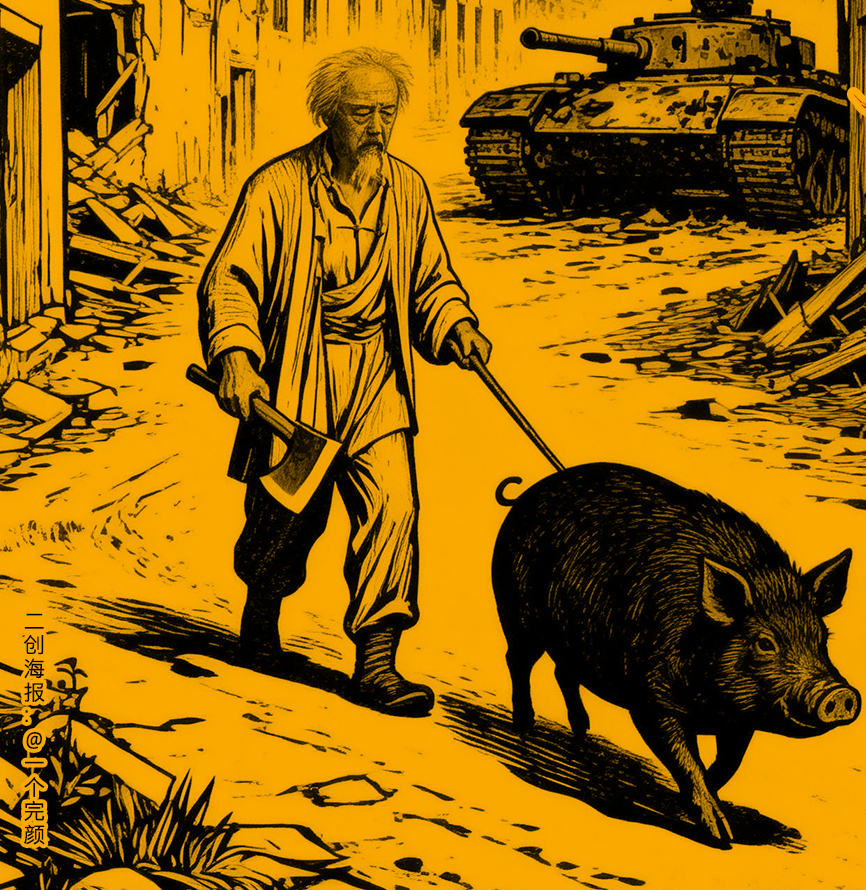
The poster created by netizen @一个完颜 features a scene from a movie depicting his great-grandfather herding pigs.
Therefore, Mo Dexian's act of stepping forward was not a sudden awakening, but an outburst with no other option. He didn't utter any grand words; his logic was simple and brutal: in order for his hearing-impaired son to live past the age of five, to spare his wife Xia Cheng from running through gunfire, and to provide his great-grandfather with a roof over his head, he had to defend his country.
This kind of "stepping forward when forced into a corner" is more moving than simply volunteering. It shows us the inherent goodness of the Chinese people, whose greatest concern is nothing more than their unwavering commitment to protecting their "small families." When foreign enemies invade and even this humble wish becomes a luxury, these most cautious ants will gather to form a thunderbolt that overthrows a behemoth. From the belief in protecting one's small family to the resolute determination to defend the nation, this is Mo Dexian's story of growth, and also the most simple and fundamental philosophy of survival on this land of China for thousands of years.
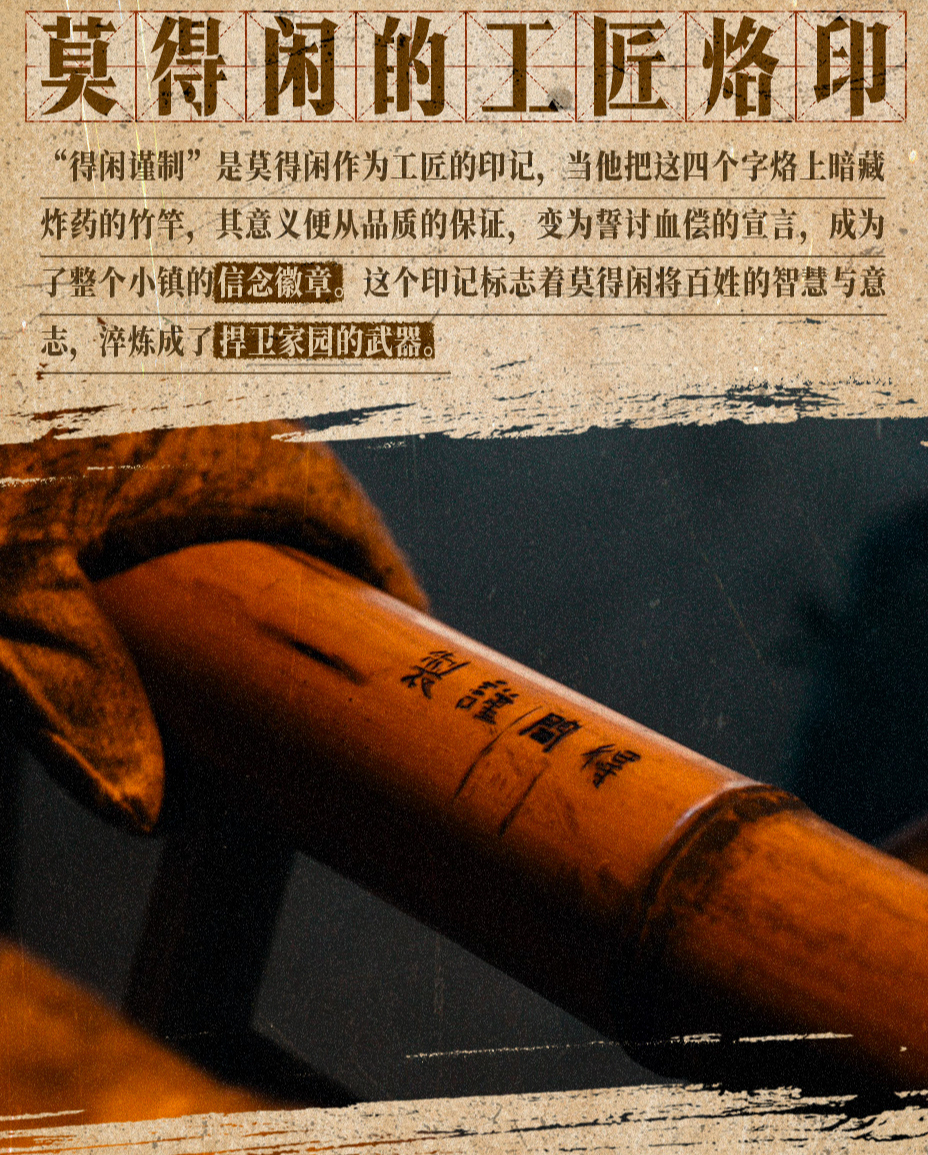
Film Details Revealed
The perfection and incompleteness of the midday sun
"Leisurely Life" showcases Daylight Entertainment's strong production capabilities: the camera language is more spatial, and the pacing is significantly different from the TV series. The film demonstrates a mature film industry standard in terms of scene presentation, ensemble management, and texture construction. However, the film also reveals the problem of "too much script foundation": how to more accurately allocate the dense script, rich ensemble cast, and profound themes within the film's length and pacing.
"Leisurely Life" is not a perfect film, but it is a sincere, stylistically conscious, and well-made one. It shows Daylight Entertainment's initiative in stepping out of its comfort zone and embracing cinematic language, and it also shows a narrative path in domestic war films that is closer to ordinary people. The film offers a perspective with great realistic significance: the victory of war is not achieved by heroes alone, but by the accumulation of the glimmers of light shone by nameless people, those who originally just wanted to live a good life, when they were pushed to the brink.
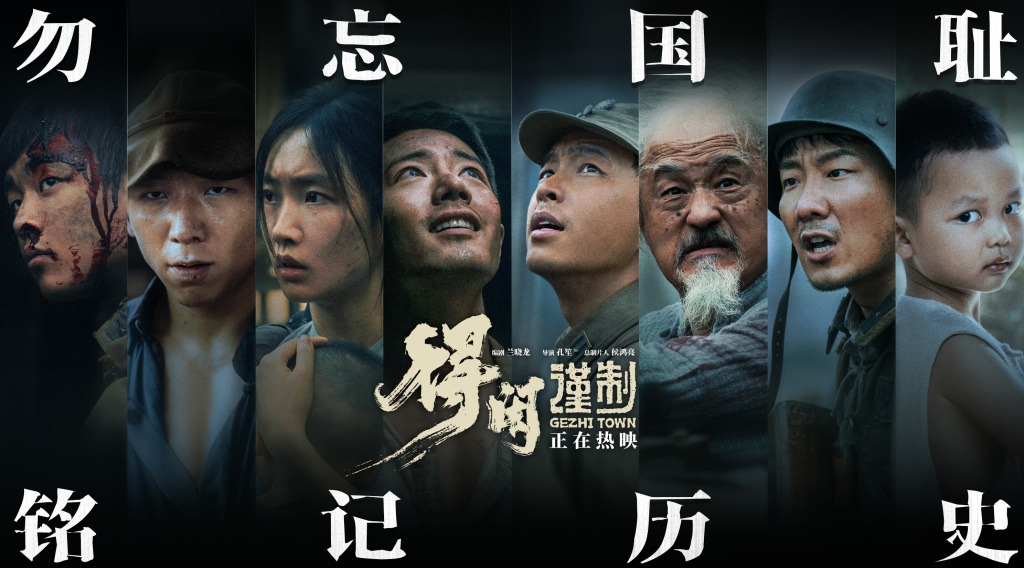
Poster for "Prudence When in Leisure"