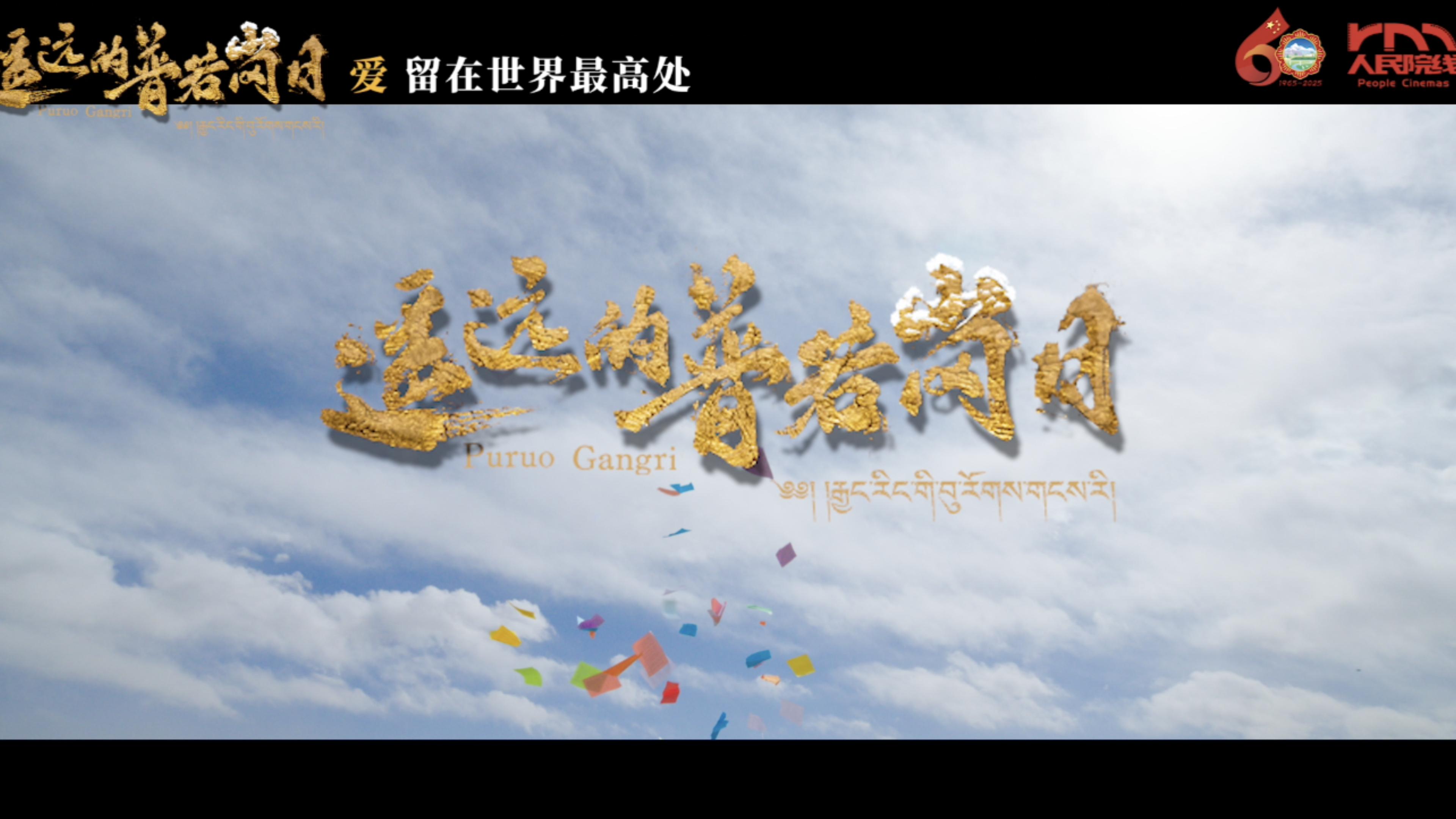
"In a world covered in ice and snow, the entire creative team used their lenses to portray courage and responsibility, creating several 'firsts' in the history of Tibetan cinema: the first feature film primarily invested in and controlled by Tibetan filmmakers; the first time, with the indomitable spirit of yaks, they delved into the unique expression of film industry aesthetics in the high-altitude environment—a 62-day shooting period, filming at altitudes of 5,000 meters and even 5,800 meters; and the first time, against the backdrop of the majestic Tibetan glaciers, showcasing their little-known charm," said host Zhu Xun at the premiere of the film "The Distant Purogangri." As a tribute to the 60th anniversary of the founding of the Tibet Autonomous Region, the film will be officially released in theaters nationwide on December 16th.
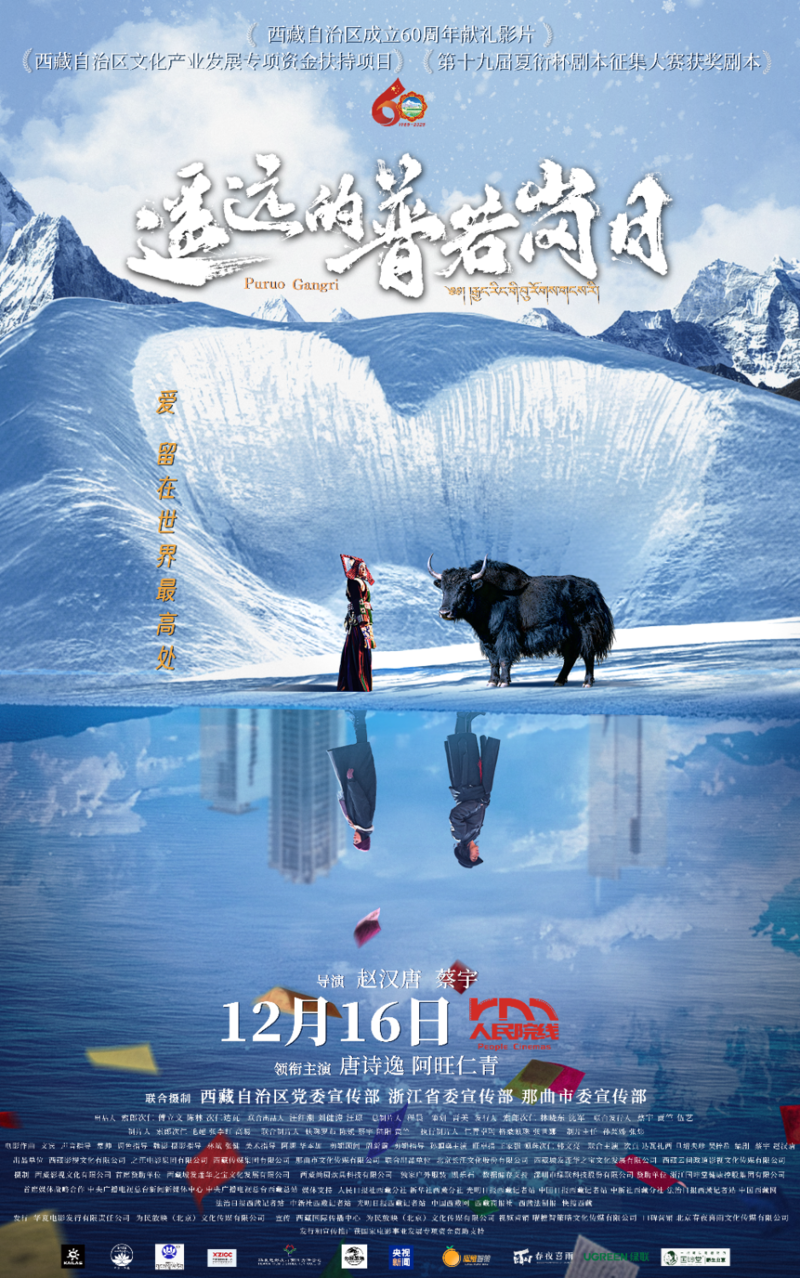
Movie poster
True story
The film's story originates in the 1970s, when the conflict between livestock and grazing land in Shenzha County, Nagqu, intensified. Tens of thousands of herders, seeking to expand their living space, moved into the uninhabited northern region to establish a new settlement—Shuanghu. In 2010, Tong Xiaofan (played by Tang Shiyi), a recent college graduate, came to Shuanghu as part of a government service program. Although initially unaccustomed to the extreme environment, an unexpected turn of events led her to stay and gradually integrate into the local community.
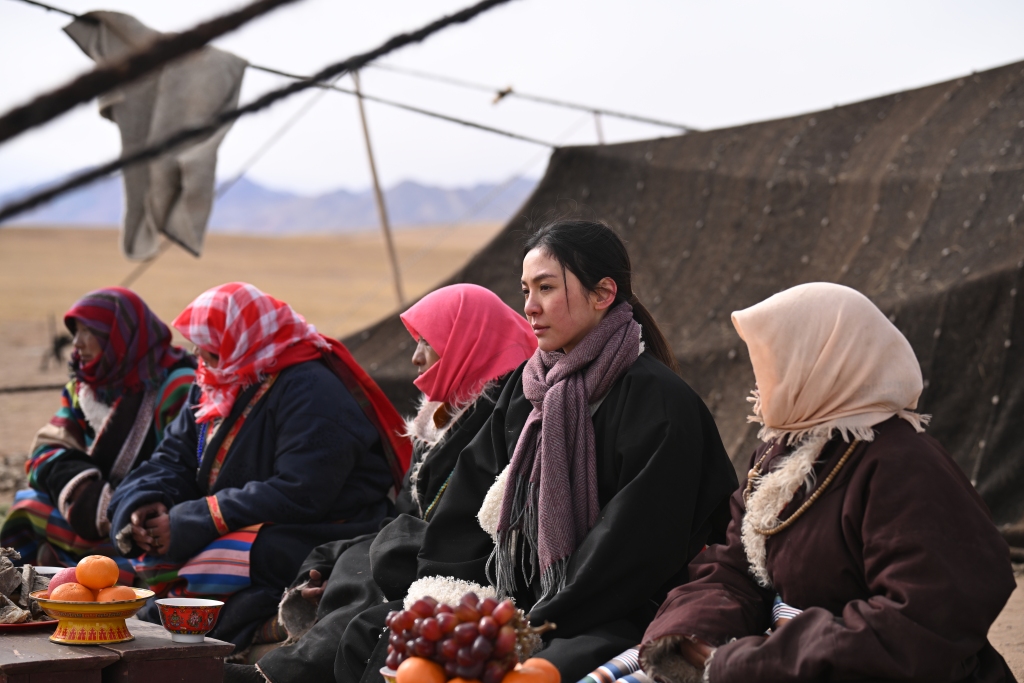
Tang Shiyi (center) as Tong Xiaofan
“Having worked in Shuanghu for six years, I don’t know how many of you here have been there.” Liang Nanyu, former deputy mayor of Nagqu City and a member of the eighth and ninth batches of cadres aiding Tibet, shared, “There is a saying in the local area to describe the altitude of the county town: ‘When you lie down, it’s less than 5,000 meters, but when you stand up, it’s more than 5,000 meters.’”
Many characters in the film are based on real people. Liang Nanyu recalled the story of a colleague: after getting married in 2011, he returned to work in Shuanghu. Due to inconvenient transportation, he couldn't go home for the Spring Festival for two consecutive years until he received his wife's divorce papers. "He didn't say anything, and took his wife to Shuanghu for a month. And then? He said his wife never told him about the family's difficulties again. It was simple, but also heartbreaking..."
"This film originated from my interviews in Shuanghu in April 2021," said director and screenwriter Cai Yu, explaining the initial inspiration for the film. "During our interviews, we discovered a little-known group of people, like people from another world, who have never been properly represented by the media, stories, films, or art forms." Cai Yu recalled that every day while filming in the area, he felt an increasing weight of responsibility on his shoulders: "At that time, I had a resolve to do my best to slowly push forward, step by step, until we finally reached today's premiere. Not for anything else, but to pay tribute to this group of the greatest grassroots cadres in Tibet!"
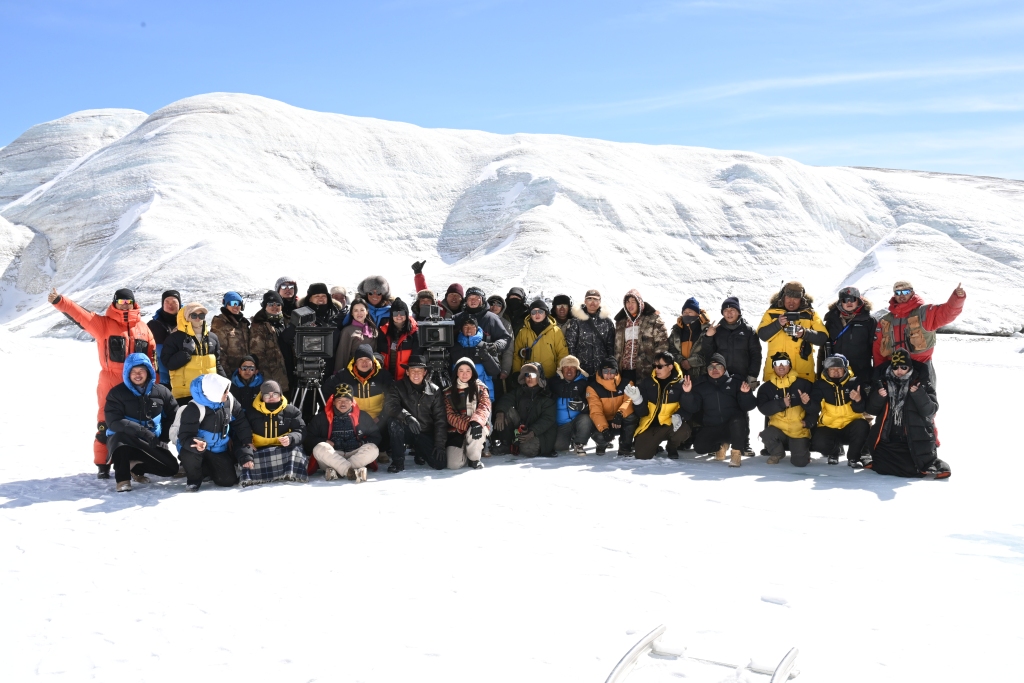
The entire crew took a group photo on the glacier.
Extreme shooting at high altitudes
"Inspired by the deeds and spirit of the local cadres who aided Tibet, our crew came together to over 5,000 meters above sea level, despite the extremely high altitude, frigid weather, and severe lack of oxygen," said director and screenwriter Zhao Hantang, sharing his filming experience. "For me personally, it was also the first time I had worked continuously for more than a month at an altitude of over 5,000 meters."
"The Distant Purogangri" achieved an unprecedented extreme challenge in the history of world cinema—as the first feature film shot on location in the uninhabited area of northern Tibet at an altitude of over 5,000 meters, the crew reached a maximum shooting altitude of 5,800 meters, a forbidden zone for life. It is estimated that the crew filmed at altitudes above 5,000 meters for 62 days. The oxygen content at the filming location was only 40% of that at sea level, and the crew faced gale-force winds exceeding level 8 every day, with short hours of sunshine, resulting in extremely limited working time. "Almost everyone in the main creative team lost over ten kilograms," Zhao Hantang revealed. "Initially, we were worried about altitude sickness among the actors, but fortunately, our actors were all very good and quickly adapted to the altitude, without missing a single day of filming."
Lead actress Tang Shiyi explained that although the environment was harsh, "the production team provided ample oxygen and equipment to ensure that the actors could focus on their performances."
Tibetan actor Awang Rinchen plays the role of Losang in the film. He shared, "I am Tibetan, and my hometown is Damxung. I have also been to Nagqu City and Shuanghu. This filming was my first time entering the Purogangri uninhabited area. Although I am not unfamiliar with the local environment, I still had to deal with altitude sickness, only the acclimatization time was shorter." Regarding the scene in the film where he sacrifices his life to save yaks, Awang Rinchen explained, "For herders, cattle and sheep are their family. Sacrificing one's life for one's family is something they take for granted."
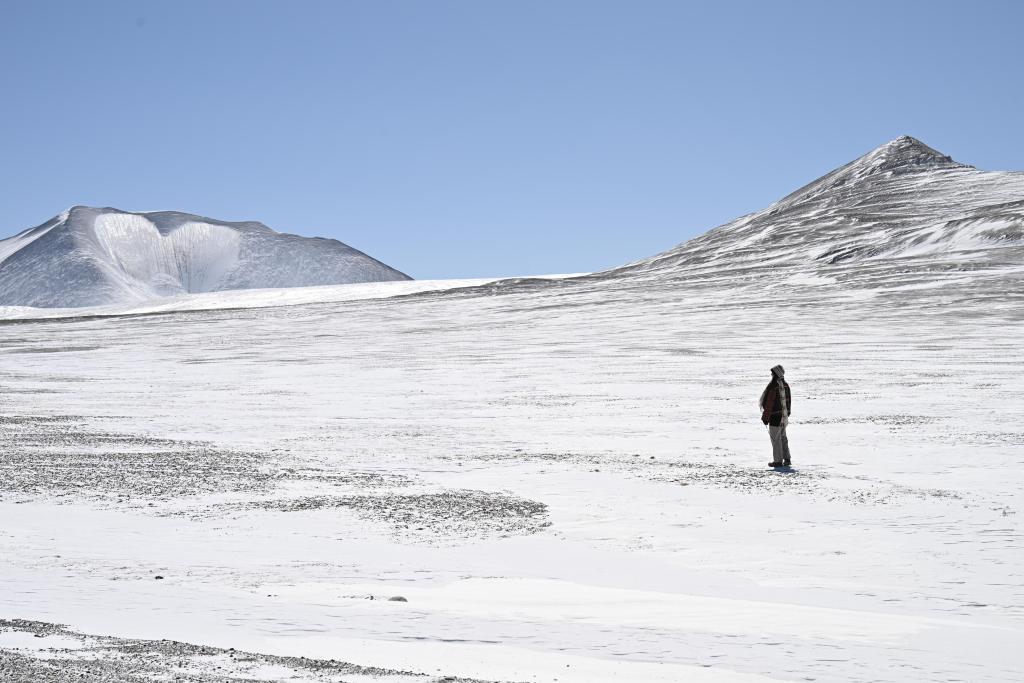
On-set photos
According to reports, 2025 has been designated as the first "International Year for Glacier Protection." The filming of "The Distant Purogangri" reflects Tibet's emphasis on ecological and environmental protection, especially glacier protection, during its modernization process. Tong Liya, Tibet's glacier protection ambassador and a special guest star in the film, said: "This film truly brings the awe and realism of glaciers to our eyes. Audiences will definitely find it particularly shocking, and I will also turn that sense of awe into a responsibility on my shoulders."
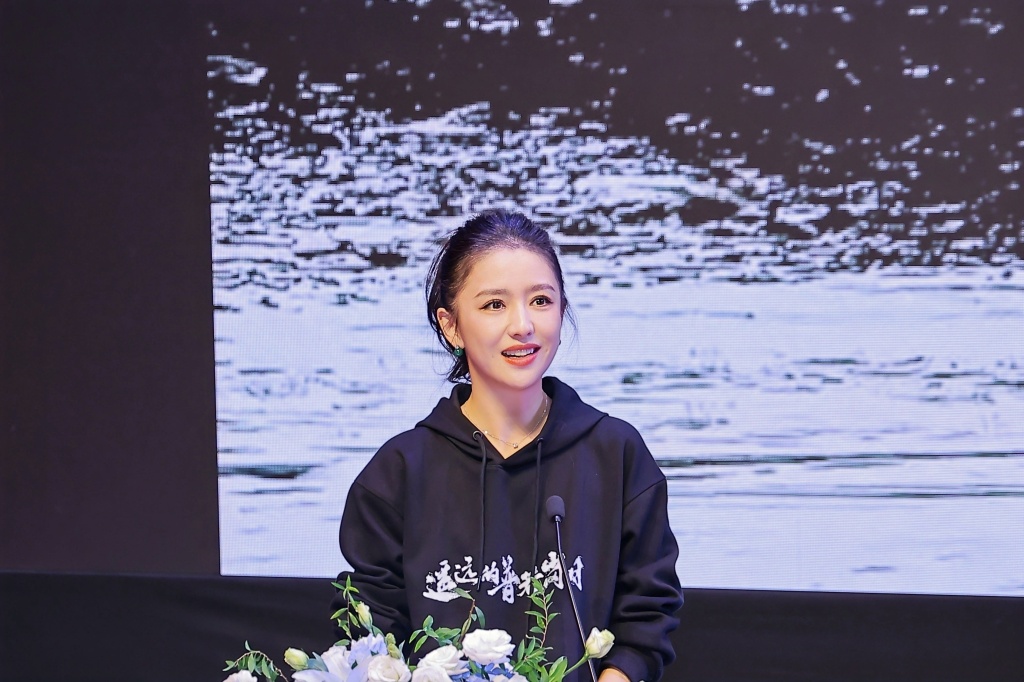
Tong Liya's speech