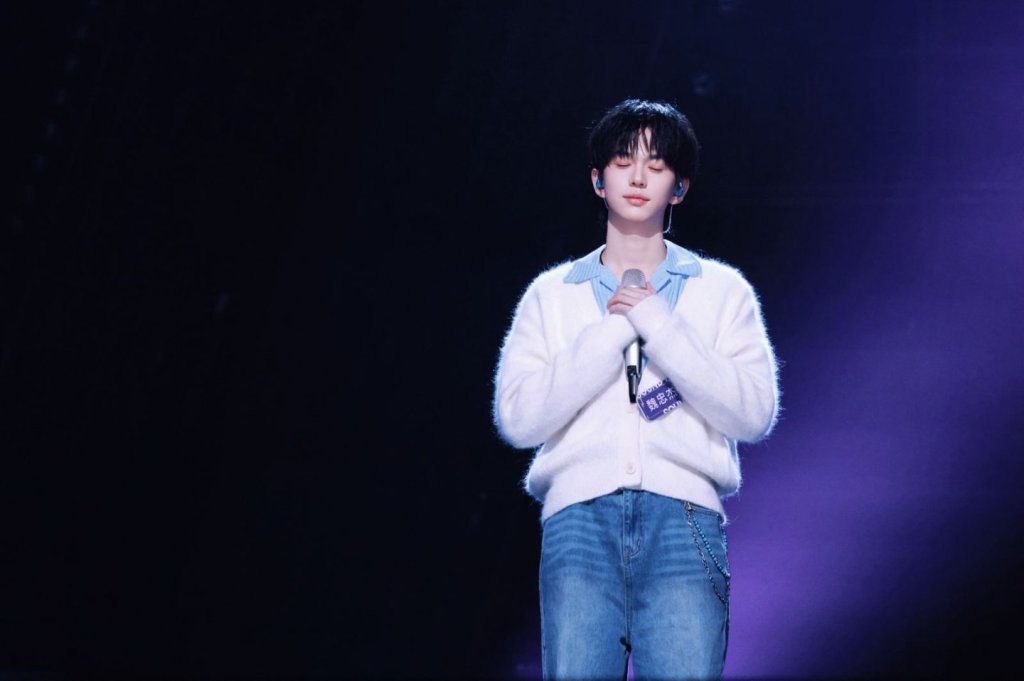
In a music competition show, hitting high notes and showing off technical skills often makes it easier to advance. But musical theater actor Wei Zhongjie chose to return to simplicity.
On the stage of "Voice of the World 2025", his first song in the preliminary round was "She's So Pretty". This song was not decorated as a "magnificent movement" or had the ambition to "take over the whole audience". It simply expressed a simple boy's feelings about unrequited love.
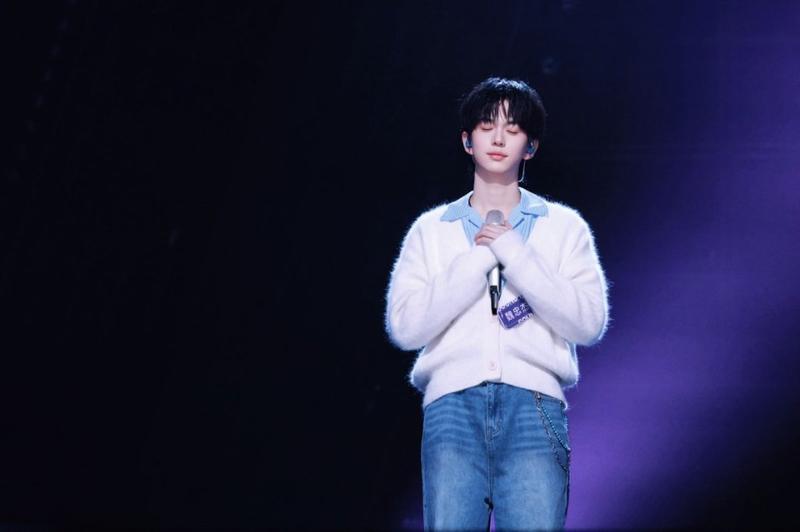
musical actor Wei Zhongjie
“I’ve learned many types of songs, and I can sing them even more ‘bigger’.” In an interview with The Paper, he admitted that he had wavered before choosing the song. “But my teacher reminded me: the most important thing about a song is its completeness.” So he returned to the starting point of singing: Could the song express an emotion? A state of mind? A real event? For him, “She’s So Pretty” was a specific moment in his youth. He rediscovered that feeling of “liking a girl and getting nervous when he saw her” and infused the song with the warmth of that memory.
After the show aired, this young man from Fuzhou, a 2022 student in the Musical Theatre Department of the Shanghai Conservatory of Music, was remembered by the audience. The judges remarked that he had "eyes that could speak." There was no greasy flirting, only a clean gaze. Some even thought he resembled Li Jian, his singing leaving a lasting impression—he handled emotions with a restraint beyond his years, gradually suppressing them until they were just right before gently releasing them. After successfully advancing, Wei Zhongjie gained popularity for his unexpectedly endearing "honest guy going all out" charm, and his handsome appearance earned him the affectionate nickname "the guy with the particularly small head" from fans.

Wei Zhongjie
Looking back on it himself, he felt there were many shortcomings: the handling of movements, the connection of breathing, and the character portrayal were all far from mature...
“Everyone spoils me,” he said with a smile, “and I need to work on the areas where I’m not good enough.” Throughout the conversation with the reporter, he maintained humility and a clear self-examination. After answering each question, he would clearly conclude, “This is the answer you just gave me…”
This "composure" that seems out of place for his age is not innate. Behind it lies the story of a boy's awkward encounter with music, his slow confirmation of its value, and his learning to live with it.

Wei Zhongjie
An unplayable vinyl record
Wei Zhongjie's musical journey did not begin with the aura of "genius narrative," but rather with a charming naiveté.
During the interview, he shared two small anecdotes.
A story about a naive passion: When he was in elementary school, he passed by a record store and was attracted by the cover of a vinyl record. He emptied his pockets and bought it with his only six hundred yuan. After excitedly returning home, he realized that he didn't have a record player at home. Undeterred, he even tried to stuff the vinyl record, which was more than twenty centimeters in diameter, into a DVD player with a diameter of only five centimeters.
"I just want to listen to music, maybe if I insert it I can get it in?"
He laughed a little embarrassedly, "That diameter is simply impossible to fit, but I really tried..."
That vinyl record is still kept at home, serving as a keepsake of "passion preceding knowledge".
Another embarrassing incident involving earnestness: During freshman military training, upon hearing a teacher mention his intention to join the Party, he mistakenly thought he needed to submit a formal application immediately. In a moment of panic, he tore off three or four sheets of musical notation paper from a classmate in the conducting department next door and neatly wrote his intention to join the Party on the blank spaces. This unique "musical notation of intention" instantly made him "famous throughout the department."
These two small incidents outline the underlying characteristics of his early personality: an almost naive and earnest impulsiveness towards what he loves. This also permeates his approach to music—uncompromising, unassuming, and with a somewhat stubborn and straightforward honesty.
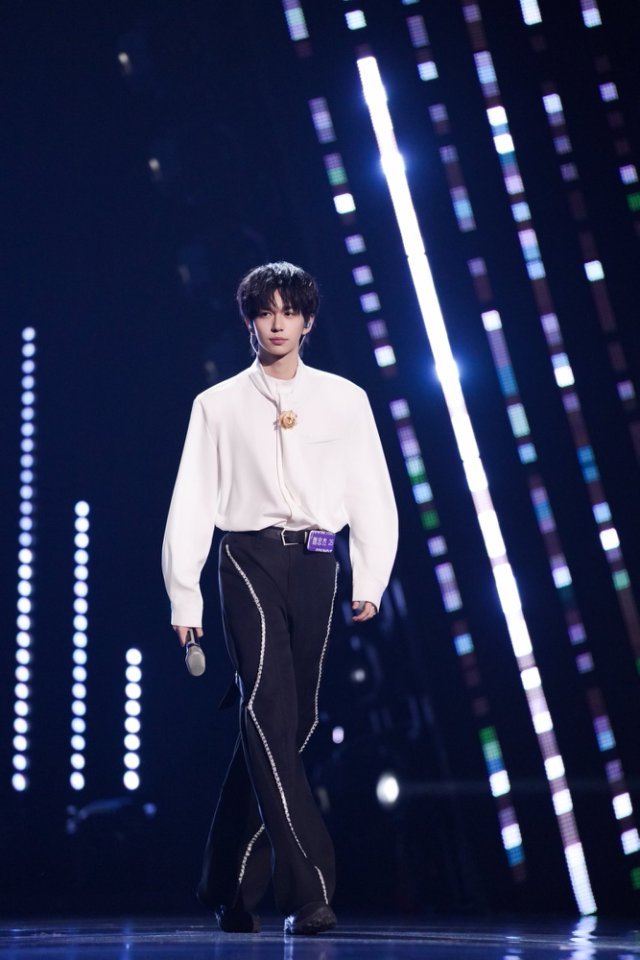
Wei Zhongjie
After the show aired, his high school teacher left a comment: "Zhongjie is truly a warm and outstanding treasure of a boy. He is ambitious, thoughtful, persistent, and hardworking. Most importantly, he is kind-hearted, pure, humble, and polite. He will definitely become a well-recognized singer with both virtue and talent. He deserves all the good things in life!"
The first setback came from "almost there".
During the conversation, the reporter gradually discovered that Wei Zhongjie possessed a "self-reflective ability" rarely seen in today's young people. His growth story lacked the arrogance of a "genius," only the trial and error, confirmation and perseverance of an ordinary person. He even revealed that in high school, he "score 9 points in math, shocking the entire grade." This somewhat laughable score led him to joke, "9 points, the limit of human potential."
True confidence comes from objective feedback on the art exam results. "At that time, I didn't know if I was okay or not among the candidates," he said. During that period, he was more like being pushed forward with the mindset of "let's give it a try," "maybe it will work," and "anyway, I like it." Until the results were released, he received good news from the schools he wanted to apply to, and even those he had only tried. This made him feel at ease for the first time: "I might be suitable for this industry." His confidence was built on external, concrete recognition, rather than blind self-satisfaction. This external-to-internal confirmation allowed him to take every step steadily afterward.
Entering the Shanghai Conservatory of Music was just the beginning of his professional training. Soon, he encountered his first real setback during rehearsals for a small-theater musical. He was given a role with complex logic that required a high degree of self-consistency. No matter how he performed, he felt that something was "missing." "My performance was illogical, I felt uncomfortable, and it didn't look right to others either." That state of "trying hard but still feeling wrong" lasted for nearly a month, causing him enormous internal friction.
Ultimately, it wasn't like what was written in the novel; he didn't experience a sudden flash of inspiration. The solution was a more clumsy, slower process of adjustment: rehearsals, reflections, and gradual adjustments. "In the end, it wasn't that I broke through it, but that it slowly adapted to me." He understood this process as "a process of finding rationalization with the character." This understanding, which doesn't rely on miracles but believes in the power of time and repetition, imbues his acting philosophy with a quiet pragmatism.
The "real" lesson
When asked what kind of person he hoped the audience would get to know through his music, Wei Zhongjie gave three words: warmth, comfort, and lingering memories. But what he really spent a lot of time elaborating on was another word: sincerity.
His understanding of "sincerity" is concrete and professional. He believes that theatrical performance is full of "obstacles": first, the audience must believe in the fictional environment; second, the audience must forget the actors themselves and believe in the characters. "As long as it's real, even if the story isn't realistic, it can still touch people's hearts." Therefore, an actor's task is not to showcase skills, but to use energy and passion to dismantle these obstacles and establish a genuine connection with the audience. This dedication to "truth" also extends to his attitude towards life.
During the conversation, Wei Zhongjie expressed his special gratitude to his mentor, who taught him "not how to sing well, but how to live well"—how to cope with pressure, how to maintain curiosity amidst busyness, and how not to rush to deny oneself when confused. For a young person just entering the industry, this guidance on "how to be authentic" is more fundamental than any technical instruction. It allowed him to maintain inner peace amidst the turbulent currents of the industry.
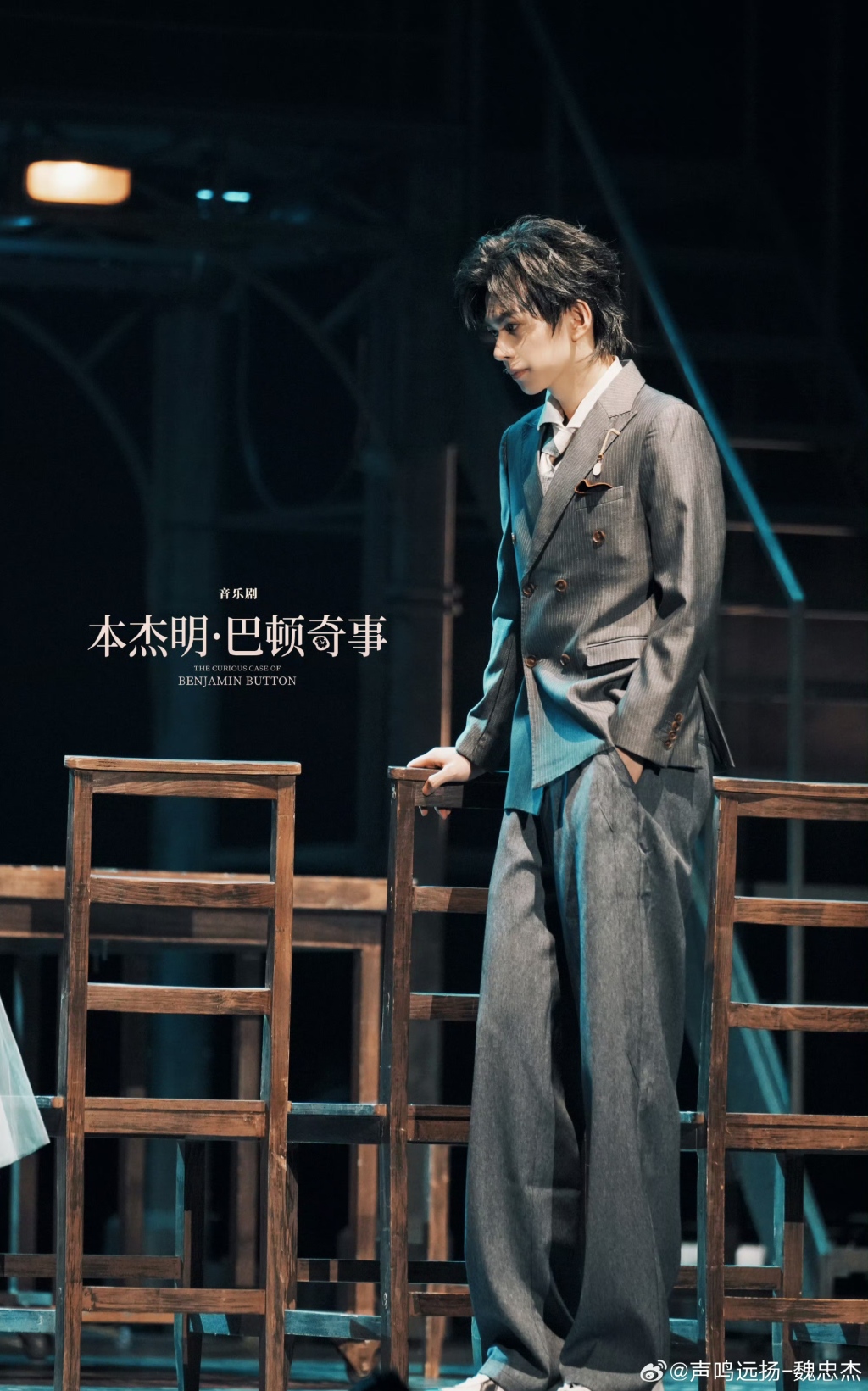
Wei Zhongjie
In the highly competitive atmosphere of the show, when asked about his expectations for the championship, his answer was almost like that of an "old cadre": "Take it one step at a time, and strive to make a name for myself on every stage." He frankly admitted that after the second performance, a message from a mentor woke him up: "Treat it (the competition) as part of a long life, don't think too much about it." He has kept this in mind ever since: if his mind is occupied by rankings, he will miss the opportunity to connect with the songs and the audience. His goal is quite simple: "Don't leave any regrets."
The show gave him an opportunity to see different ways of expression. He began to actively communicate and discuss approaches in the rehearsal room—this was growth outside the show. Throughout all his growth, he always maintained one core principle: his work must be solid. He was unwilling to use short-term techniques to cover up long-term shortcomings, nor was he willing to compress his creative space due to anxiety.
"What I hope for most now is to be sincere every time I go on stage."
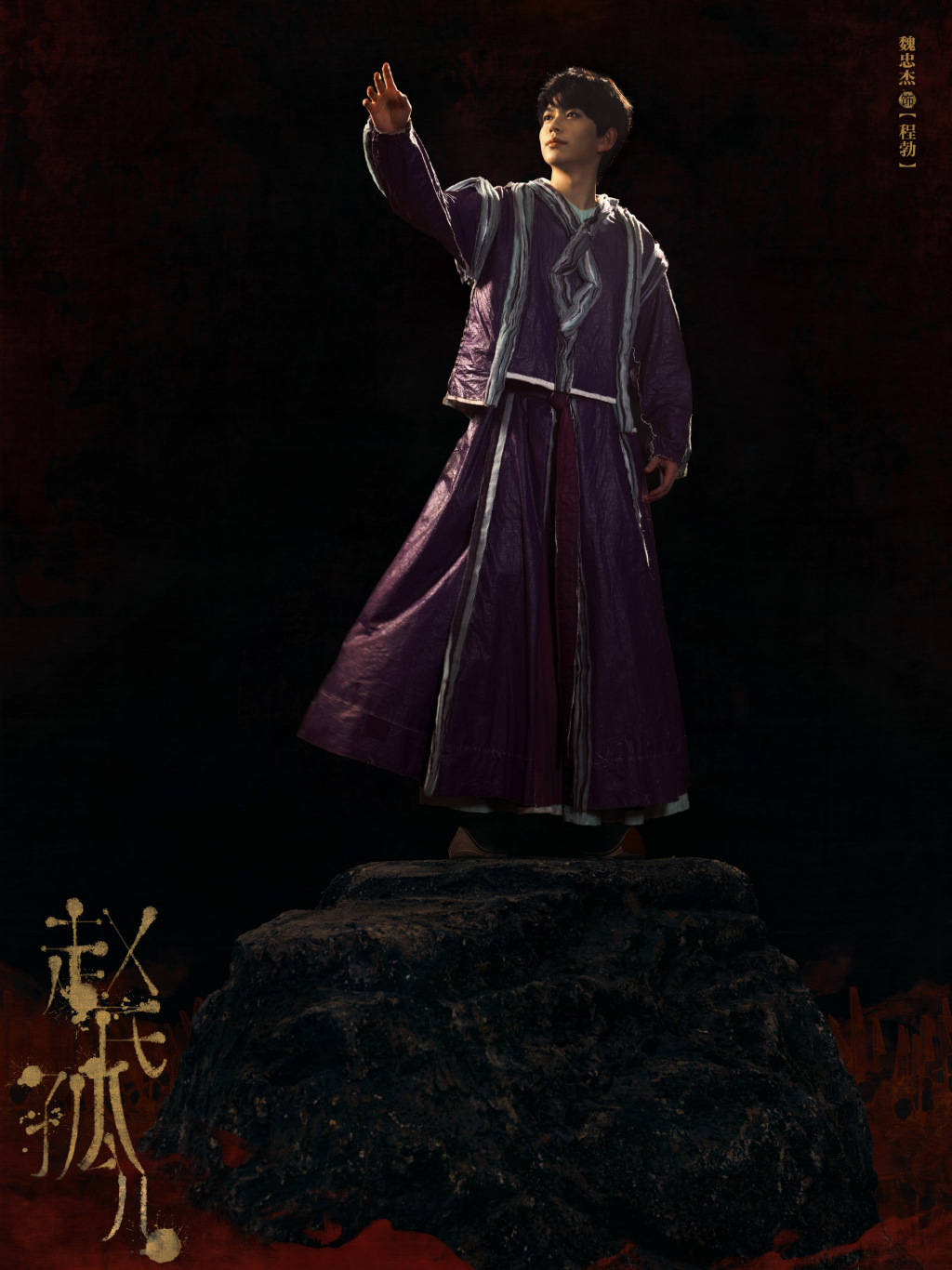
Wei Zhongjie's stills from the TV series "The Orphan of Zhao"
His musical works are mostly performed on campus, but he also participates in commercial performances outside of school. He played the lead role of "Cheng Bo" in the musical "The Orphan of Zhao" and "Huai En" in the musical "The Lighthouse". Compared with his seniors who have been in the industry for more than ten years, Wei Zhongjie's resume is still relatively thin. But it is precisely this "not yet fully defined" nature that gives him greater versatility.
One viewer commented after watching "The Orphan of Zhao": "Xiao Wei's current state is so similar to Cheng Bo when he went out to gain experience. The part where he was searching doesn't seem like acting."
It doesn't feel like acting; that's probably the greatest compliment an actor can receive.
Wei Zhongjie's charm lies not in momentary bursts of brilliance, but in consistent stability. In an industry where everyone vies for attention and craves quick success, Wei Zhongjie's "steadiness" has become a strategy. He doesn't rush to prove how great he is, but focuses on singing each song "right." As he says, he wants to refocus his mind on the songs.
He also made the audience realize that some music doesn't need to be loud to be heard.