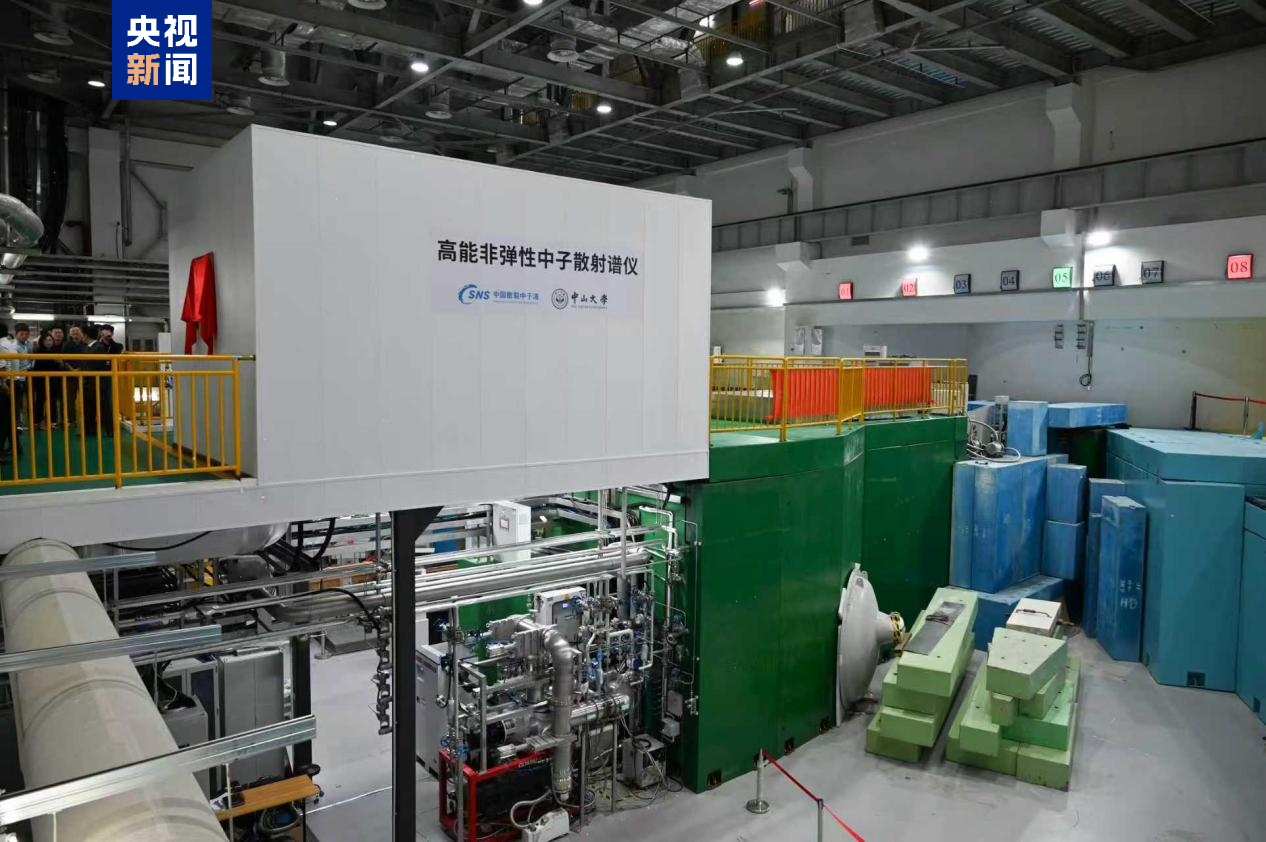
The Institute of High Energy Physics, Chinese Academy of Sciences, announced that my country's first high-energy direct geometric inelastic neutron scattering spectrometer (hereinafter referred to as "high-energy inelastic spectrometer") passed acceptance testing on November 16 and is ready to be put into operation and conduct scientific experiments.
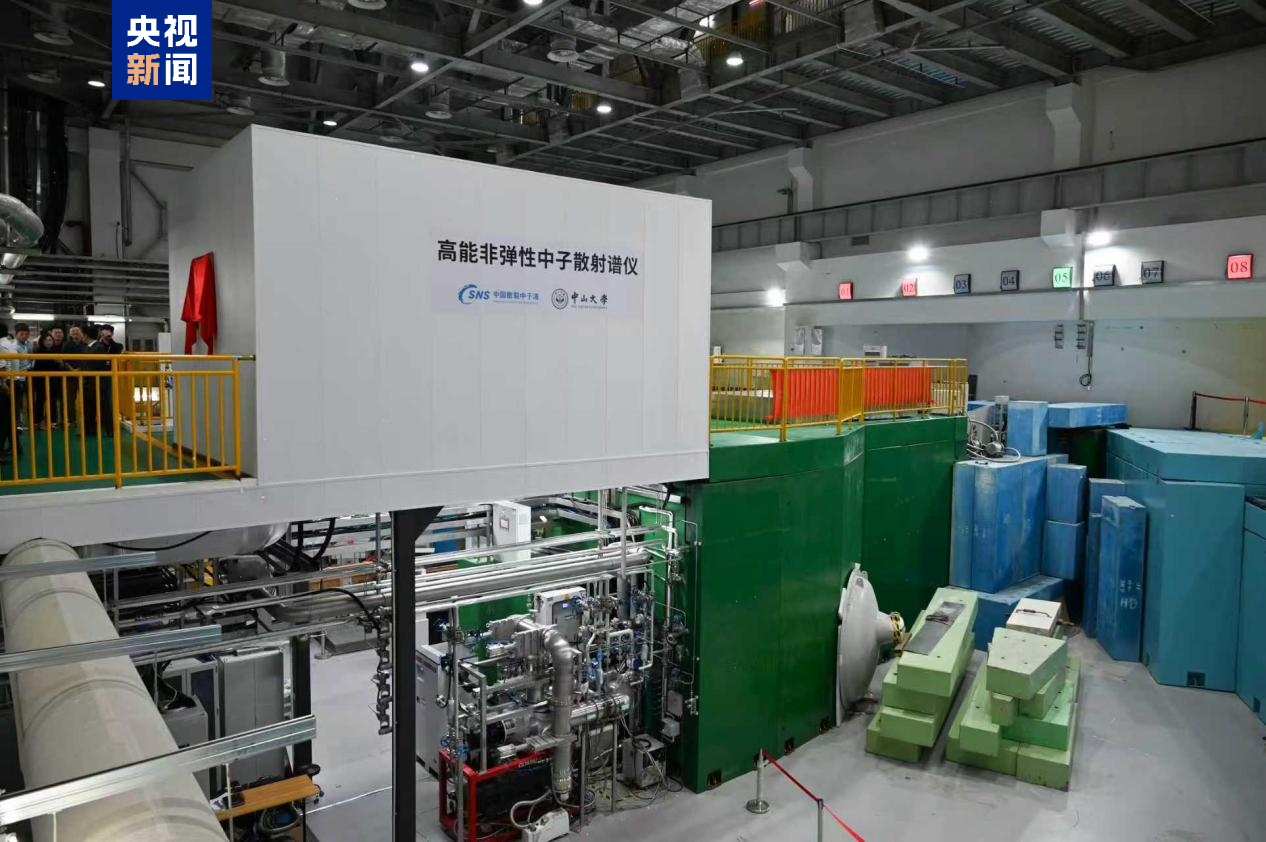
This "super camera," jointly developed by Sun Yat-sen University and the China Spallation Neutron Source Science Center, fills the gap in my country's high-energy inelastic neutron scattering spectrometers above 100 meV (millielectronvolts), and will provide an important research platform for research in thermoelectric materials, magnetic materials, high-temperature superconductors, energy materials, and biomaterials. It is also my country's first time-of-flight inelastic neutron scattering spectrometer, marking a significant expansion of the research field of the China Spallation Neutron Source from static material structure to material dynamics.
High-energy inelastic spectrometers utilize the characteristics of neutrons—uncharged and highly penetrating—to directly detect the microscopic motion within matter. When a neutron undergoes an inelastic collision with the atomic nucleus in matter, it changes its velocity and direction. Through these changes, scientists can deduce dynamic information about the interior of the matter.
According to Tong Xin, head of the spectrometer and deputy director of the Dongguan Research Department of the Institute of High Energy Physics, Chinese Academy of Sciences, the unique feature of the high-energy inelastic spectrometer is that it can not only see the static structure of matter, but also detect the dynamic processes of atoms and molecules within matter on a picosecond (one trillionth of a second) timescale, recording every moment of how atoms and molecules vibrate, rotate, and transfer energy. If other spectrometers can "take pictures" of materials, then the high-energy inelastic spectrometer can "take videos" of materials.
Construction of the High Energy Inelastic Spectrometer (HEIS) began in September 2019. It features innovative designs for multi-beam experimental modes, with many components developed in-house by the construction team. Key technologies overcome included the development of the Fermi chopper, an ultra-large vacuum scattering cavity, a magnetic sample environment suitable for neutron scattering, and a large-area high-pressure helium-3 neutron detector. The first neutron beam was detected on January 12, 2023. After two years of commissioning, the HEIS has achieved incident neutron energies of 10-1500 meV, with an optimal energy resolution of 3%. Its signal-to-noise ratio and specific power incident flux have reached internationally advanced levels. Furthermore, the spectrometer provides high- and low-temperature environments of 3-800K and a magnetic field environment of 7T, covering most inelastic neutron scattering experimental scenarios.
After completing acceptance testing, the high-energy inelastic spectrometer will enter the trial operation phase and is scheduled to be officially opened to users in 2026. It will provide strong support for cutting-edge basic research on high-temperature superconductivity physics mechanisms, quantum magnetic interaction mechanisms, transport properties of thermoelectric materials, ion diffusion mechanisms in batteries, and biomaterial activity.